
Getting around Portugal is one of the easiest parts of planning a trip to the country. Despite being relatively small, Portugal has an efficient transport network that connects major cities, beach towns, wine regions, and smaller historic villages surprisingly well. Whether you plan to travel by train along the coast, take long-distance buses between cities, rent a car for a road trip, or use local metros and trams in Lisbon and Porto, there are transport options for almost every type of traveler and budget.
For first-time visitors, understanding how transport works can make a huge difference to both your costs and your overall experience. Some routes are incredibly scenic by train, while others are far easier by car. In certain regions, public transport is excellent, while in others it can be slow or limited. This guide covers everything you need to know about getting around Portugal, including trains, buses, car rentals, flights, city transport, driving tips, and the best transport options depending on your itinerary.
Table of Contents
Is Portugal Easy to Travel Around?
Yes — Portugal is generally considered one of the easiest countries in Europe to travel around. Distances are manageable, roads are good quality, and the public transport system is reliable and affordable.
Most travelers focus on destinations such as:
- Lisbon
- Porto
- The Algarve
- Sintra
- Coimbra
- Douro Valley
These are all well connected by rail or bus services. Even smaller towns are usually accessible through regional trains or coach services.
Portugal is also a very safe country for travelers, which makes using public transport simple even for solo travelers.
Getting Around Portugal by Train
For many travelers, trains are the best way to travel around Portugal. The rail network is comfortable, scenic, affordable, and efficient for major routes.
The national train operator is Comboios de Portugal (CP), and trains connect most major destinations.
Main Train Routes in Portugal
Popular train journeys include:
- Lisbon to Porto
- Lisbon to Faro (Algarve)
- Porto to Coimbra
- Porto to Braga
- Lisbon to Aveiro
The fastest trains are called Alfa Pendular services. These connect the major cities with modern high-speed trains offering comfortable seats, Wi-Fi, air conditioning, and food services.
There are also Intercidades trains, which are slightly slower but often cheaper.
Should You Book Trains in Advance?
For long-distance routes — especially Lisbon to Porto — booking in advance is recommended. Prices are usually much cheaper when purchased early.
During summer and holidays, trains can sell out on popular routes.
Best Train Journeys in Portugal
Some train routes are experiences in themselves:
- The Douro Valley train route from Porto is considered one of Europe’s most scenic rail journeys
- Coastal sections between Lisbon and Porto offer beautiful Atlantic views
- Algarve regional trains pass through charming southern towns
When Trains Are the Best Option
Trains work best for travelers visiting:
- Lisbon
- Porto
- Coimbra
- Braga
- Faro
They are less practical for very rural regions or hidden villages.
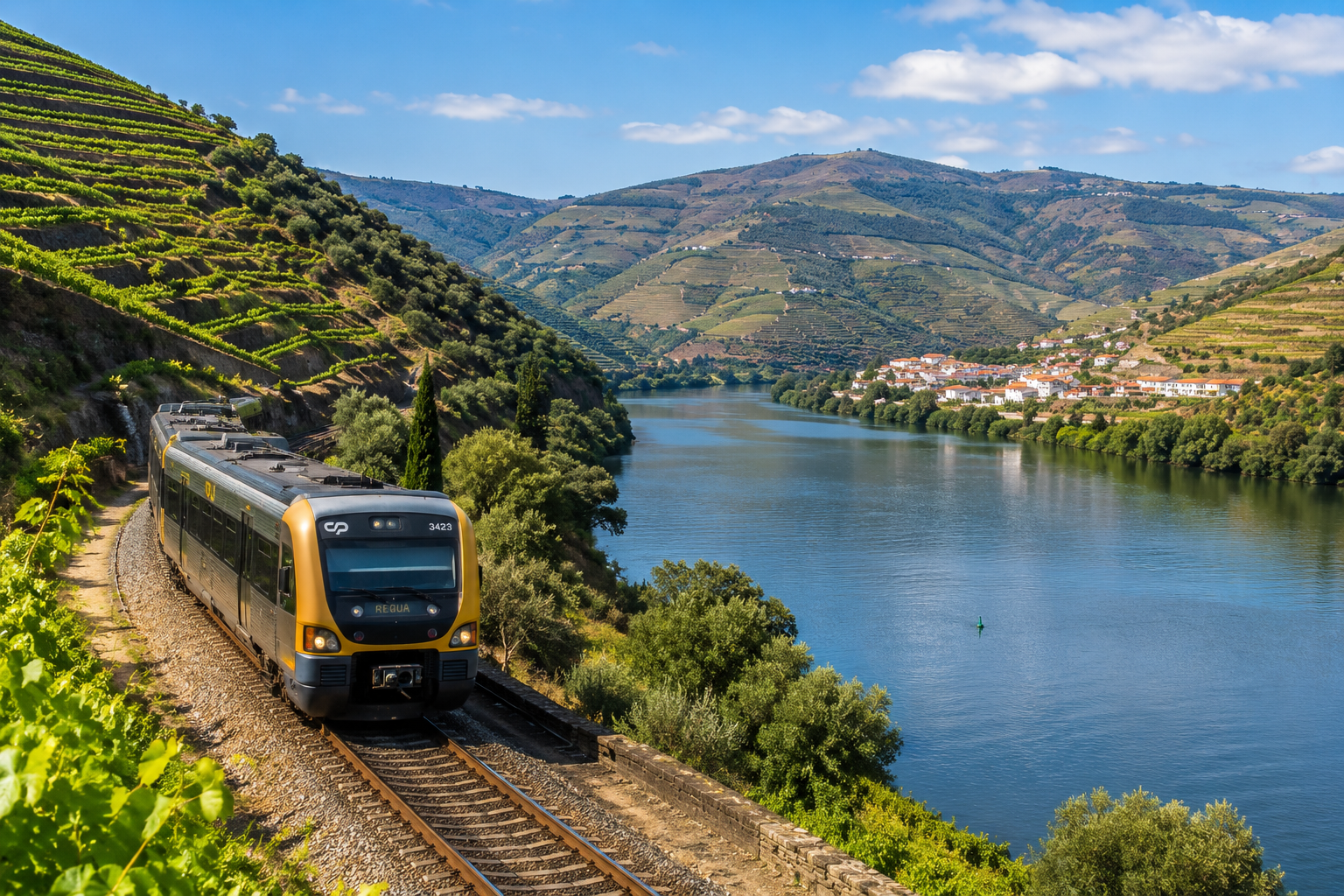
Check train schedules and prices on the official CP Rail website.
Getting Around Portugal by Bus
Portugal’s long-distance bus network is excellent and often reaches destinations that trains do not.
The two main operators are:
- Rede Expressos
- FlixBus
Why Buses Are Popular in Portugal
Buses are often:
- Cheaper than trains
- More flexible
- Better for smaller towns
- Faster on certain routes
For example, buses can be easier for reaching places such as:
- Nazaré
- Óbidos
- Lagos
- Évora
Budget travelers often prefer buses because tickets can sometimes cost only a few euros if booked early.
Bus vs Train in Portugal
| Route | Better Option |
| Lisbon to Porto | Train |
| Lisbon to Algarve | Either |
| Lisbon to Nazaré | Bus |
| Porto to Douro Valley | Train |
| Rural villages | Bus or car |
Comfort Levels
Modern Portuguese coaches are generally very comfortable, with:
- Air conditioning
- Reclining seats
- USB charging
- Wi-Fi on many services
Renting a Car in Portugal
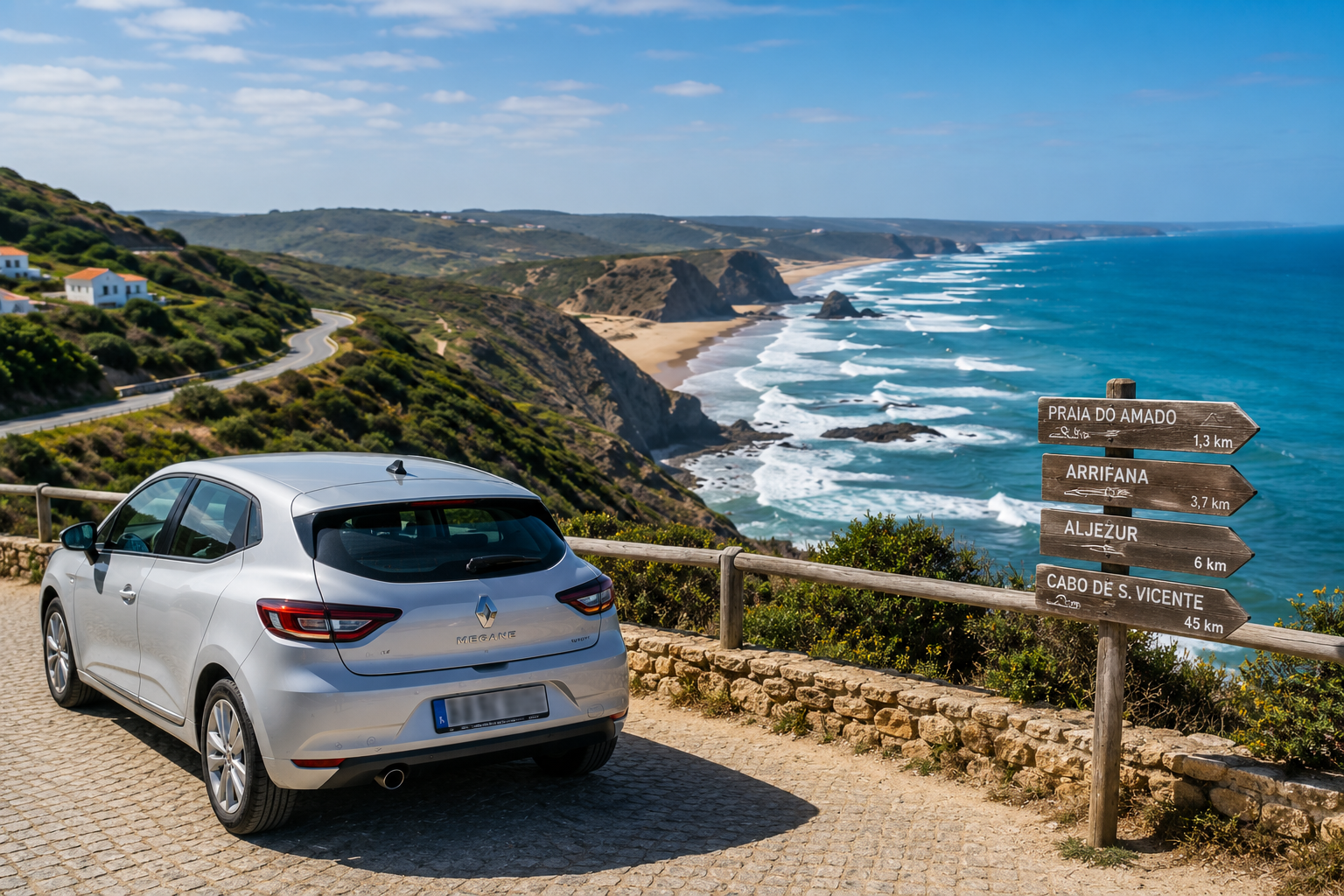
If you want flexibility, renting a car is one of the best ways to explore Portugal — especially outside the major cities.
A car becomes particularly useful when visiting:
- The Algarve countryside
- Alentejo
- Smaller coastal towns
- Mountain villages
- Hidden beaches
- Wine regions
Check out the top 10 hidden gems in Portugal
Is Driving in Portugal Easy?
Overall, yes. Portugal’s roads are modern and well maintained.
Highways between major cities are excellent, and signage is straightforward.
However, there are a few things travelers should know:
- Lisbon streets can be narrow and stressful
- Porto has steep hills and tight roads
- Parking in old city centers can be difficult
- Toll roads are common
Toll Roads in Portugal
Many Portuguese highways use electronic toll systems. Rental car companies usually provide toll transponders that automatically bill you later.
Always confirm how tolls work before leaving the rental office.
Do You Need a Car in Lisbon or Porto?
No. In fact, a car can become more of a hassle than a benefit in the major cities.
Public transport in both Lisbon and Porto is excellent, and parking can be expensive.
Most travelers rent a car only after leaving the cities.
Best Portugal Road Trip Routes
Popular self-drive routes include:
- Lisbon → Algarve
- Porto → Douro Valley
- Lisbon → Alentejo
- Coastal Atlantic road trips
Domestic Flights in Portugal
Portugal is compact enough that domestic flights are rarely necessary on mainland routes.
For example:
- Lisbon to Porto is usually easier by train
- Lisbon to Faro is often similar in total travel time once airport procedures are included
However, flights can make sense for:
- The Azores
- Madeira
- Travelers short on time
TAP Air Portugal and Ryanair operate many domestic routes.
Using Public Transport in Lisbon
Lisbon has one of the best public transport systems in Southern Europe.
Options include:
- Metro
- Trams
- Buses
- Ferries
- Funiculars
- Trains
Lisbon Metro
The Lisbon Metro is clean, affordable, and easy to navigate. It is the fastest way to move around the city.
It connects:
- The airport
- Downtown Lisbon
- Major neighborhoods
Historic Trams
The famous yellow trams are both tourist attractions and working transport.
Tram 28 is particularly popular because it passes many historic neighborhoods.
Be aware that trams can become crowded during peak tourist season.
Lisboa Card
Many visitors buy the Lisboa Card, which includes:
- Unlimited public transport
- Discounts on attractions
- Museum entry benefits
Check out our Lisbon Travel Guide for more information.

Using Public Transport in Porto
Porto also has a reliable transport network that is easy for visitors to use.
Porto Metro
The Porto Metro is modern, efficient, and especially useful for:
- Airport transfers
- Moving between neighborhoods
- Reaching Vila Nova de Gaia
Walking in Porto
Porto is extremely walkable, although the steep hills can be tiring.
Comfortable shoes are highly recommended.
River Transport
Short river crossings between Porto and Gaia are available and can be a scenic alternative to walking across the bridges.
Check out our Porto Travel Guide for more information.
Traveling Around the Algarve
The Algarve is one of the few regions where transport planning becomes more important.
Train Services
A regional train runs along parts of the Algarve coast, connecting towns such as:
- Faro
- Albufeira
- Lagos
- Tavira
However, stations are sometimes located outside the main tourist areas.
Is a Car Worth It in the Algarve?
For many travelers, yes.
A car makes it far easier to:
- Visit hidden beaches
- Explore cliff viewpoints
- Reach smaller towns
- Travel at your own pace
Without a car, you may rely heavily on buses, taxis, or tours.
Ride Sharing, Uber, and Taxis in Portugal
Portugal is very friendly toward ride-sharing services.
Uber and Bolt operate widely in:
- Lisbon
- Porto
- Faro
- Many tourist areas
They are usually affordable compared to other Western European countries.
Taxis in Portugal
Taxis are safe and regulated, but ride-sharing apps are often cheaper and easier for tourists.
Airport transfers through Uber or Bolt are extremely common.
Transport Costs in Portugal
Portugal remains relatively affordable compared to much of Western Europe.
Approximate transport costs:
| Transport | Typical Cost |
| Lisbon metro ticket | €1.80–€2 |
| Lisbon to Porto train | €15–€40 |
| Long-distance bus | €5–€25 |
| Rental car | €25–€60/day |
| Uber in cities | Usually inexpensive |
| Domestic flight | €30–€120 |
Booking in advance often makes a significant difference.
Also look at our Portugal on a budget page for more money-saving tips.
Best Way to Travel Around Portugal by Travel Style
Best for Budget Travelers
- Long-distance buses
- Regional trains
- Ride sharing
Best for Convenience
- High-speed trains
- Uber/Bolt in cities
Best for Flexibility
- Rental car
Best for Scenic Travel
- Douro Valley train
- Algarve road trips
- Coastal drives
Best for First-Time Visitors
A combination of:
- Trains between major cities
- Public transport in Lisbon and Porto
- Occasional car rental for rural areas
Final Thoughts on Getting Around Portugal
Portugal is one of Europe’s easiest countries to explore independently. Whether you prefer scenic train journeys, affordable buses, relaxed road trips, or efficient city metros, there are transport options for every budget and travel style.
For most visitors, the ideal approach is a mix of transport methods. Trains are perfect for moving between major cities like Lisbon and Porto, while rental cars unlock Portugal’s smaller villages, beaches, and hidden coastal routes. With a little planning, getting around Portugal becomes part of the experience itself — from riding historic trams through Lisbon to watching vineyards roll past your train window in the Douro Valley.