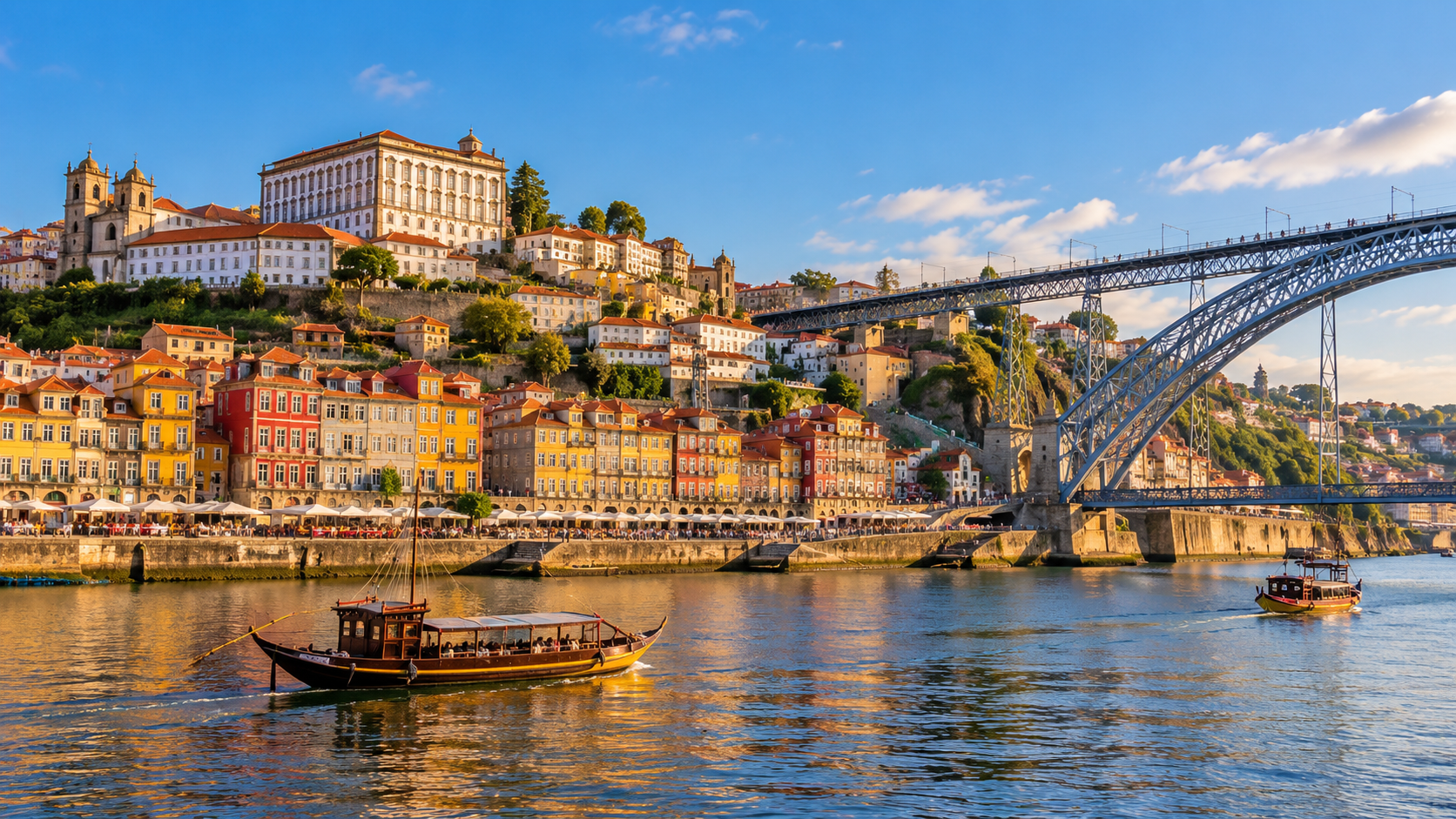
Porto packs an impressive amount into a relatively compact city. Historic streets tumble towards the Douro River, blue-and-white azulejos decorate churches and railway stations, and centuries-old Port wine cellars sit just across the water in Vila Nova de Gaia. Add excellent food, dramatic viewpoints and one of Europe’s most recognisable bridges, and there is plenty to fill a few days.
This guide covers the best things to do in Porto for first-time visitors, focusing on the experiences that are genuinely worth making time for rather than trying to list every attraction in the city.
Most of Porto’s major sights can be explored on foot, although the steep streets mean distances can feel considerably longer than they look on a map. With two or three days, you can comfortably cover the main attractions while still leaving time to enjoy the city’s cafés, restaurants and riverside atmosphere.
Also check out our Porto Travel Guide for more ideas and tips.
Table of Contents
Quick Overview: Best Things to Do in Porto
If you’re short on time, these are some of Porto’s standout experiences:
- Best overall experience: Explore Ribeira and the Douro riverfront
- Best viewpoint: Climb Clérigos Tower
- Best cultural attraction: São Bento Railway Station
- Best food experience: Try a traditional francesinha
- Best free experience: Walk across the Dom Luís I Bridge
- Best wine experience: Visit a Port wine cellar in Vila Nova de Gaia
- Best place to relax: Jardins do Palácio de Cristal
1. Explore Ribeira and the Douro Riverfront
Porto’s Ribeira district is one of the city’s most recognisable areas and an excellent place to begin exploring. Colourful buildings line the northern bank of the Douro while narrow medieval streets climb steeply into the historic centre behind them.
The best way to experience Ribeira is simply to walk. Wander through the lanes leading towards the river before following the waterfront around Praça da Ribeira and Cais da Ribeira. Across the Douro you’ll see Vila Nova de Gaia, where many of the city’s famous Port wine lodges are located, while the enormous Dom Luís I Bridge dominates the view to the east.
Ribeira becomes particularly atmospheric towards the end of the day, when the waterfront restaurants and cafés become busier and the light begins to change over the river.
You don’t need a ticket and can easily spend one or two hours exploring, although it is also somewhere you’ll probably pass through several times during your stay.
Practical tip: Porto is hilly and Ribeira sits at river level. Wear comfortable shoes and expect a fairly steep walk when heading back towards the upper historic centre.
2. Walk Across the Dom Luís I Bridge
Few structures are as closely associated with Porto as the Dom Luís I Bridge. The huge iron bridge spans the Douro between Porto and Vila Nova de Gaia and offers some of the best views of both sides of the river.
There are two levels, and if you have time, it’s worth experiencing both. The lower level connects the Ribeira waterfront directly with Gaia’s riverfront, making it useful when visiting the Port wine cellars.
The upper level is the real highlight for sightseeing. From here you get sweeping views across the river, with Ribeira’s colourful buildings stacked against the hillside and the Port wine lodges stretching along the opposite bank.
Crossing the bridge itself is free and doesn’t take long, but allow extra time for photographs. Late afternoon and early evening are particularly good times to visit.
If you cross the upper level towards Gaia, continue to the nearby Jardim do Morro, where you can sit overlooking Porto. It’s one of the simplest — and cheapest — ways to enjoy one of the city’s best panoramas.
3. Visit São Bento Railway Station
A working railway station might not sound like an essential tourist attraction, but São Bento is different.
The station’s entrance hall is decorated with enormous blue-and-white azulejo panels depicting scenes from Portuguese history and traditional life. Even if you’re not catching a train, it’s worth stepping inside for a closer look.
São Bento is particularly easy to include in your itinerary because of its central location. Porto Cathedral, Avenida dos Aliados and Ribeira are all within walking distance, so you don’t need to dedicate a large part of the day to visiting it.
Around 15–30 minutes is usually enough for the main entrance hall, although photographers may want longer.
Entry to the public areas of the station is free, making this one of the best free things to do in Porto.
Try visiting earlier in the morning if you want to see the tiled hall when it is less busy. During the middle of the day, the combination of commuters, rail passengers and sightseers can make the entrance considerably more crowded.
4. Visit a Port Wine Cellar in Vila Nova de Gaia
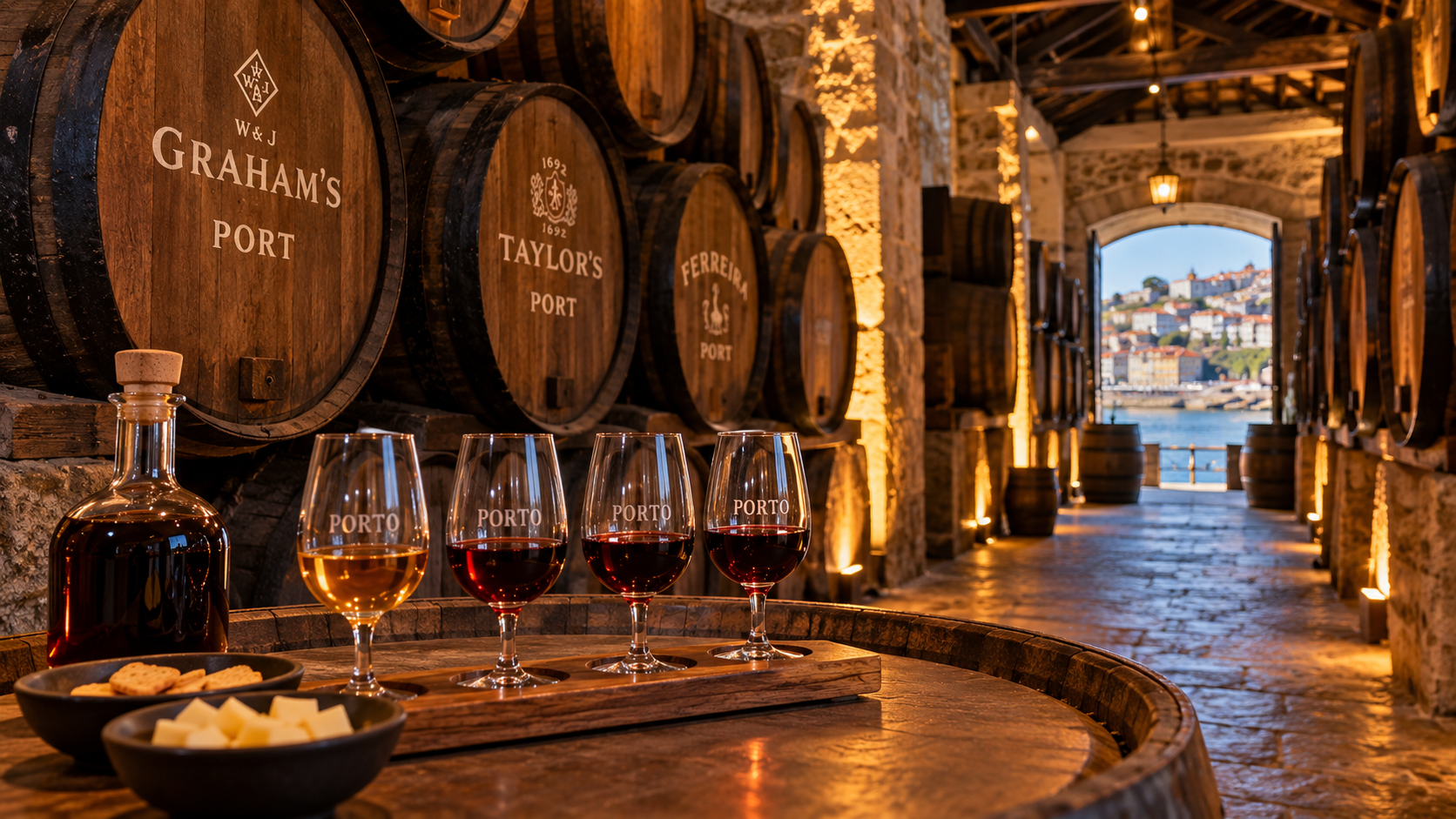
You can hardly visit Porto without encountering Port wine, but the famous wine lodges are actually located across the Douro in Vila Nova de Gaia.
Several historic producers offer cellar tours and tastings. A typical visit introduces the history of Port, explains how different styles are produced and aged, and finishes with a tasting.
Even if you aren’t particularly knowledgeable about wine, a cellar tour provides useful context for understanding Porto’s historic relationship with the Douro Valley and the wine trade.
Allow roughly one to two hours depending on the experience you choose. Afterwards, spend some time exploring Gaia’s waterfront, where you’ll find restaurants, bars and excellent views back towards Porto.
Popular cellar tours can fill up, particularly during busy travel periods, so this is one Porto experience worth booking ahead if you have a specific producer or time in mind.
Rising above Porto’s historic centre, the 75-metre Clérigos Tower is one of the city’s most prominent landmarks.
For a particularly enjoyable day, combine a cellar visit with Ribeira and walk between them using the lower deck of the Dom Luís I Bridge.
5. Climb Clérigos Tower
Reaching the top requires climbing more than 200 steps, but the reward is a panoramic view over Porto’s terracotta rooftops. From the top you can pick out many of the places you’ll visit during your trip, including the Douro and the city’s historic churches.
The staircase becomes narrow in places, so the climb won’t suit everyone. If you’re comfortable with steps and confined stairways, however, this is one of Porto’s best traditional viewpoints.
Allow approximately an hour for the church and tower, depending on queues and how long you spend at the top.
Clérigos is also very conveniently located. Livraria Lello is only a short walk away, making the two attractions easy to combine.
Timed tickets are a sensible option during busy periods, particularly if you only have a day or two in Porto.
6. See Livraria Lello
Livraria Lello is one of Porto’s most photographed attractions. The historic bookshop is known for its elaborate interior, stained glass, carved woodwork and sweeping crimson staircase.
Unlike a normal bookshop, Livraria Lello operates very much as a visitor attraction, and entry requires a ticket. This can make it relatively expensive for what may be a fairly short visit, so whether it is essential depends on your interests.
For book lovers and anyone interested in architecture and historic interiors, it is well worth considering. If your main priority is simply seeing Porto’s historic streets and riverfront, however, you shouldn’t feel that your trip is incomplete if you skip it.
The biggest issue is crowds. Booking a timed entry in advance is strongly recommended rather than simply arriving and hoping for a quiet visit.
Allow around 45 minutes to an hour.
7. Visit Porto Cathedral
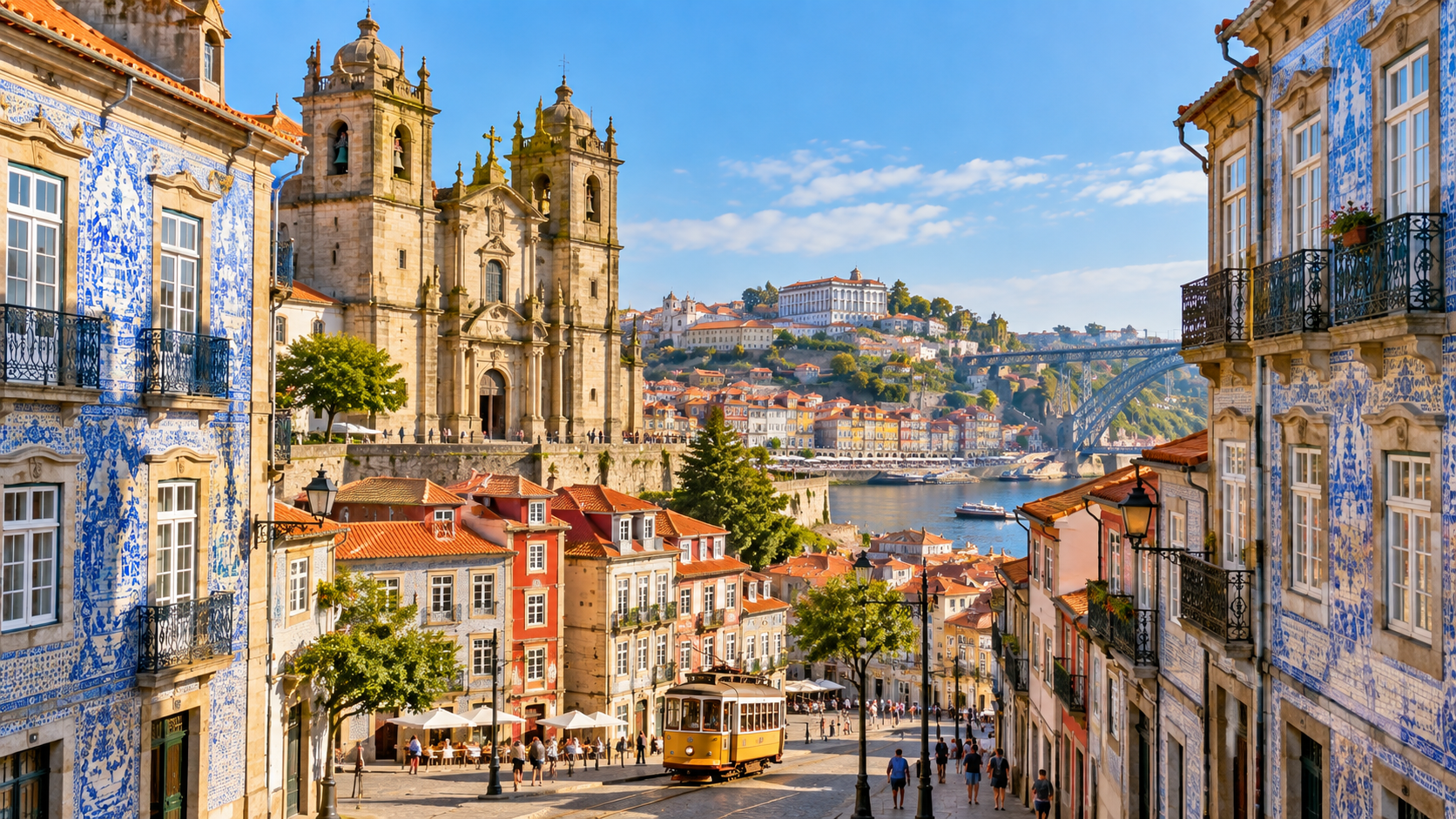
Porto Cathedral, or Sé do Porto, stands high above the historic centre and is one of the city’s oldest and most important religious buildings.
The cathedral has been altered considerably over the centuries, resulting in an interesting mixture of architectural styles. The surrounding terraces also provide excellent views across Porto’s rooftops and towards the Douro.
One of the highlights is the cloister, where traditional azulejo panels provide yet another example of the decorative tiles that appear throughout the city.
The cathedral’s location makes it particularly useful when planning a walking route through historic Porto. From São Bento, walk uphill towards the cathedral before descending through the old streets towards Ribeira.
Allow around 45 minutes if you’re exploring the cathedral and cloisters rather than simply stopping outside.
Even if you decide not to go inside, the elevated square in front of the cathedral is worth visiting for the views and atmosphere.
8. Try a Francesinha
Not everything worth doing in Porto involves sightseeing.
One of the city’s most famous dishes is the francesinha, an enormous sandwich typically filled with meat, covered with melted cheese and served in a rich beer-and-tomato-based sauce. It is often accompanied by chips and sometimes topped with an egg.
It isn’t exactly a light lunch.
Different restaurants have their own recipes and loyal followings, and arguments over who makes Porto’s best francesinha can become surprisingly serious. Rather than worrying too much about finding the single “best” version, choose a well-regarded traditional restaurant and try it for yourself.
It’s worth arriving hungry, as portions can be substantial.
If the francesinha doesn’t appeal, Porto still has plenty to offer food-focused travellers, from pastries and traditional Portuguese dishes to seafood and the stalls of Mercado do Bolhão.
Trying the local food is an easy experience to work around your sightseeing rather than something requiring a separate part of your itinerary.
9. Relax in the Jardins do Palácio de Cristal
After Porto’s hills, staircases and busy historic streets, the Jardins do Palácio de Cristal provide a welcome change of pace.
These landscaped gardens sit above the Douro and include tree-lined paths, lawns and several viewpoints overlooking the river. They’re particularly good if you want somewhere peaceful to spend an hour between Porto’s busier attractions.
The gardens themselves are free to visit, making them another good option for travellers keeping sightseeing costs under control.
Allow around one to two hours if you want to explore at a relaxed pace. They also work well as a picnic stop on a sunny day.
The main drawback is that they’re slightly removed from the tight cluster of attractions around Ribeira, Clérigos and São Bento. For a very short visit, you may prioritise those sights instead.
With three or more days in Porto, however, the gardens are an easy addition and show a quieter side of the city.
10. Take a Douro River Cruise
Seeing Porto from the water provides a completely different perspective on the city.
Short sightseeing cruises operate along the Douro, passing beneath Porto’s bridges and offering views back towards Ribeira, Gaia and the steep hillsides on either side of the river.
These shouldn’t be confused with full-day trips into the Douro Valley. A city river cruise is primarily a sightseeing experience and usually fits easily into a Porto itinerary without consuming most of your day.
Cruises are particularly useful if you’ve already spent several hours walking — Porto’s hills can become tiring surprisingly quickly.
If you’re visiting for only one day, a cruise is optional rather than essential; walking through Ribeira and across the Dom Luís I Bridge gives you excellent river views for free.
With two or three days, however, it provides a pleasant break from sightseeing on foot.
Looking for a complete itinerary? Check out our 10-Day Portugal Itinerary.
Tickets, Tours and Time-Saving Tips
Many of the best things to do in Porto require little or no advance planning. Ribeira, São Bento Station, the Dom Luís I Bridge and the Palácio de Cristal gardens can all be explored independently.
There are, however, a few attractions worth planning ahead.
Book Livraria Lello in advance if it is high on your list, as timed slots can be busy. The same applies to popular Port wine cellar tours, particularly if you want to visit a specific lodge.
Booking Clérigos Tower ahead can also be useful during busy periods.
For opening hours, temporary closures and up-to-date visitor information across the city, check the official Visit Porto tourism website before travelling.
If you’re short on time, prioritise Ribeira, the Dom Luís I Bridge, São Bento and one experience that particularly interests you, such as a wine cellar or Clérigos Tower.
How to Fit the Best Things to Do in Porto Into Your Trip
One Day in Porto
With one day, concentrate on the historic centre. Start at São Bento Railway Station, walk towards Porto Cathedral and descend to Ribeira. Cross the Dom Luís I Bridge into Gaia and either visit a Port wine cellar or walk to Jardim do Morro for the view.
You won’t see everything, but you’ll experience many of Porto’s highlights without spending the entire day rushing between attractions.
2–3 Days in Porto
Two or three days is a much better introduction to the city. In addition to the main historic sights, you’ll have time for Livraria Lello, Clérigos Tower, a Port tasting, a river cruise and the Palácio de Cristal gardens.
You’ll also have enough time to enjoy meals and wander through Porto rather than treating every hour as another sightseeing slot.
Here are some ideas on where to stay in Porto.
4+ Days in Porto
Four days gives you time to explore Porto at a relaxed pace and begin looking beyond the city centre. You could explore the Atlantic coastline around Foz do Douro or use Porto as a base for a day trip.
If Porto forms part of a wider Portuguese holiday, you may prefer to spend two or three nights here before continuing elsewhere.
FAQs About Things to Do in Porto
What is the number one thing to do in Porto?
For a first visit, combine Ribeira with a walk across the Dom Luís I Bridge. Together they provide some of Porto’s most recognisable scenery and give you excellent views of the Douro, historic centre and Vila Nova de Gaia.
Are there free things to do in Porto?
Yes. Walking through Ribeira, crossing the Dom Luís I Bridge, visiting the public areas of São Bento Station and exploring the Jardins do Palácio de Cristal are all excellent free experiences.
Is Porto worth visiting?
Absolutely. Porto combines historic architecture, river scenery, excellent food and wine with a compact centre that makes it relatively easy to explore over a few days. It also works well as part of a longer Portugal itinerary.
How many days do you need in Porto?
Two to three full days is ideal for most first-time visitors. Two days covers the major sights, while a third allows you to explore more slowly and add experiences such as a river cruise or gardens.
Can you see Porto in one day?
Yes, but you’ll need to prioritise. São Bento, Porto Cathedral, Ribeira, the Dom Luís I Bridge and Gaia can all be combined into a busy but manageable walking route.
Plan Your Visit to Porto
The best way to experience Porto is not to rush through every attraction. Give yourself time to wander the historic streets, stop at viewpoints and enjoy the riverfront alongside the city’s major sights.
For more help planning your trip, read our Porto Travel Guide for an overview of the city, or see Where to Stay in Porto if you’re deciding which area to use as your base.
If Porto is part of a longer trip, our 7-Day Portugal Itinerary can help you fit the city into a wider route through Portugal.