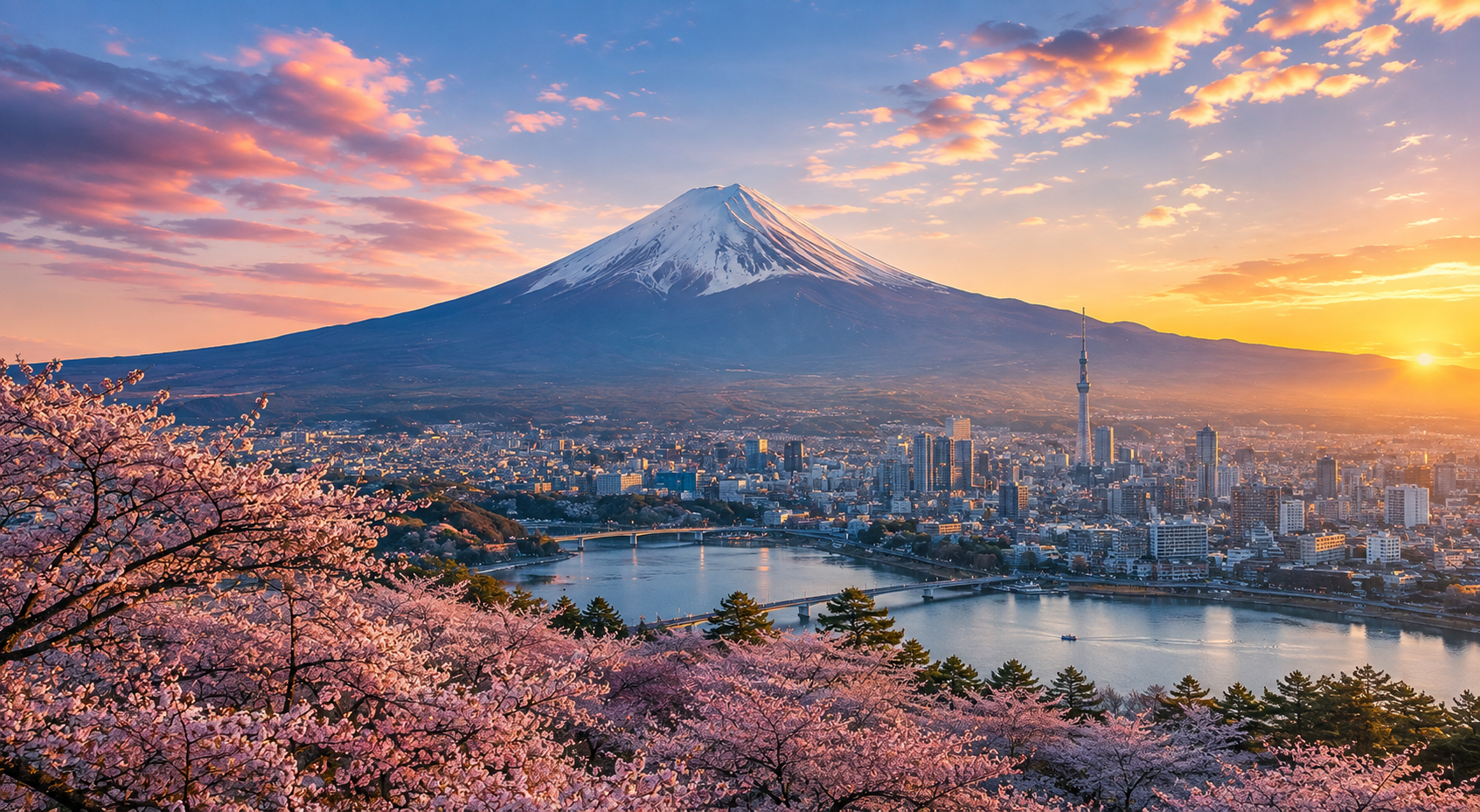
Japan can feel like several destinations rolled into one. Futuristic city skylines sit alongside centuries-old temples, bullet trains carry passengers between historic towns at astonishing speed, and some of the country’s best experiences can be as simple as wandering through a quiet neighbourhood or sitting down to a bowl of ramen. This Japan travel guide covers the essentials you need to start planning your first trip.
For first-time visitors, Japan is particularly rewarding because there is so much variety within a relatively manageable journey. You can spend a morning surrounded by Tokyo’s skyscrapers, stay in a traditional ryokan, explore the temples of Kyoto, eat your way through Osaka and then escape into mountains, forests or coastal scenery.
Japan is also far easier to travel around than its size and language differences might initially suggest. Its extensive rail network, excellent public transport and well-developed tourism infrastructure make independent travel straightforward once you understand the basics.
This guide covers the best places to visit in Japan, when to go, what a trip is likely to cost, how to get around and how you might structure your itinerary.
Table of Contents
Why Visit Japan?
Few countries combine old and new as dramatically as Japan.
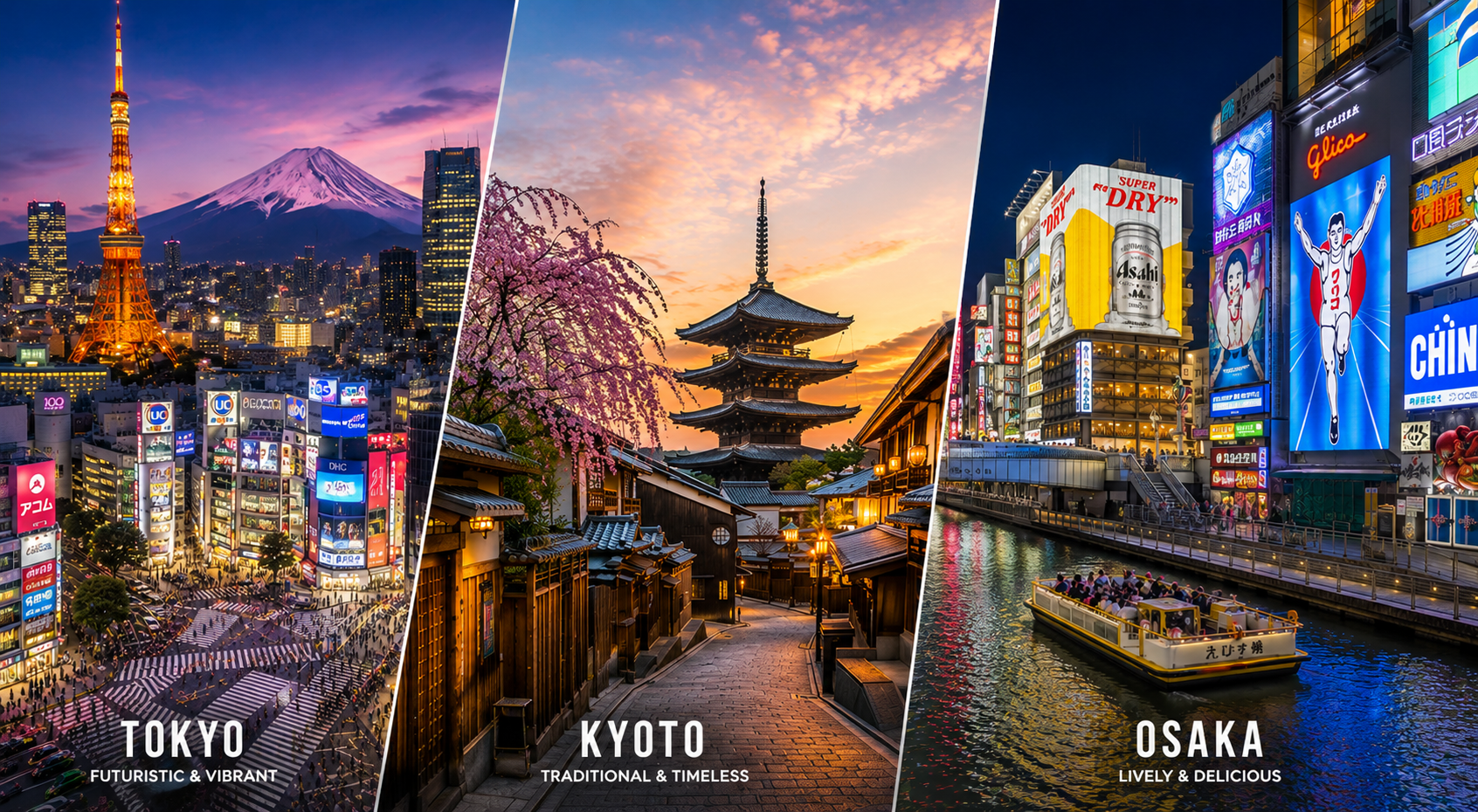
Tokyo provides the ultra-modern side of the country, with enormous railway stations, neon entertainment districts, observation decks, shopping centres and neighbourhoods that can feel like cities in their own right. Yet even here, shrines, traditional gardens and older neighbourhoods are never particularly far away.
Travel to Kyoto and the atmosphere changes completely. The former imperial capital is famous for temples, shrines, traditional wooden buildings and some of Japan’s most recognisable historic streets.
Then there is the food.
Sushi may be Japan’s most famous culinary export, but travelling through the country introduces you to ramen, udon, soba, yakitori, tempura, okonomiyaki, tonkatsu and countless regional specialities. Eating well doesn’t necessarily mean spending heavily either. Some memorable meals can be found in tiny neighbourhood restaurants, railway stations and food halls.
Beyond the major cities, Japan offers mountains, volcanic landscapes, beaches, forests, hot springs and rural villages. You can hike in the Japanese Alps, visit Mount Fuji, relax in an onsen town or explore subtropical islands in Okinawa.
Japan also has one significant advantage for travellers wanting to see several destinations in one trip: its transport network. Fast, frequent trains make multi-city itineraries remarkably practical.
Top Places to Visit in Japan
Trying to see everything is one of the easiest mistakes to make when planning a first trip. Japan has 47 prefectures and an enormous number of worthwhile destinations, so choosing a handful usually creates a much better trip.
Tokyo
For most visitors, Tokyo is the natural starting point.
Japan’s capital is enormous, but it becomes much easier to understand when you think of it as a collection of distinct neighbourhoods. Shibuya and Shinjuku offer the bright lights and skyscrapers many visitors imagine before arriving, while Asakusa provides temples and a more traditional atmosphere.
Food, shopping, museums, nightlife and entertainment could easily fill a week, although three or four days gives first-time visitors a good introduction.
Kyoto
If Tokyo represents modern Japan, Kyoto provides the historical counterpoint.
The city contains some of the country’s most famous temples and shrines, including Fushimi Inari Taisha and Kinkaku-ji, alongside traditional neighbourhoods such as Gion.
Kyoto deserves at least two or three days, particularly because many of its major attractions are spread across different parts of the city.
Osaka
Osaka has a more relaxed, energetic feel than either Tokyo or Kyoto and is especially appealing to travellers interested in food and nightlife.
Dotonbori is the city’s best-known entertainment area, while Osaka Castle, Kuromon Market and the city’s numerous shopping districts provide plenty to explore during the day.
Its location also makes Osaka a useful base for day trips around the Kansai region.
Hiroshima
Hiroshima is understandably associated with the events of 1945, and the Peace Memorial Park and museum remain among the most significant places to visit in Japan.
However, the modern city offers considerably more, and nearby Miyajima—with its famous Itsukushima Shrine—is easily combined with a stay in Hiroshima.
Mount Fuji and the Fuji Five Lakes
Mount Fuji is Japan’s most recognisable natural landmark.
The Fuji Five Lakes region provides some of the best views of the mountain and is a popular escape from Tokyo. Lake Kawaguchiko is particularly accessible and works well as either a day trip or overnight stay.
Beyond the Classic Route
Travellers with more time can explore considerably further.
The Japanese Alps offer hiking, mountain scenery and historic towns such as Takayama. Hokkaido is known for wilderness, skiing and cooler summers, while Kyushu combines volcanic landscapes, hot springs and major cities including Fukuoka and Nagasaki.
Okinawa provides yet another version of Japan, with a subtropical climate, beaches and a distinctive history and culture.
Best Time to Visit Japan
The best time to visit Japan depends heavily on what you want from your trip.
Spring, particularly late March through April in many of the major tourist areas, is famous for cherry blossoms. The scenery can be spectacular, but this popularity also means increased crowds and accommodation demand.
Autumn is another excellent period. October and November generally bring comfortable sightseeing conditions to much of central Japan, while autumn colours transform temples, parks and mountain landscapes.
Summer can be hot and humid, particularly in Tokyo, Kyoto and Osaka. June is associated with the rainy season across much of the country, although Hokkaido is less affected. Summer does, however, bring festivals and is the main climbing season for Mount Fuji.
Winter is excellent for skiing and snow scenery, particularly in Hokkaido and the Japanese Alps. Major cities remain perfectly viable winter destinations as well.
Try to plan particularly carefully around major domestic travel periods such as Golden Week, Obon and New Year, when accommodation and transport can become considerably busier.
Weather and Climate in Japan
Japan’s length means there is no single Japanese climate.
Hokkaido in the north experiences cold, snowy winters and relatively mild summers. Tokyo, Kyoto and Osaka have four distinct seasons, with hot, humid summers and generally cool winters. Travel further south towards Okinawa and conditions become subtropical.
This variation is important when packing.
Someone visiting Tokyo and Kyoto during spring may encounter mild days and cooler evenings, while a winter itinerary combining Tokyo and Hokkaido requires very different clothing.
Rainfall also varies by region and season. Much of Japan experiences a rainy season around early summer, followed by hotter and more humid conditions. Typhoons can affect parts of the country later in summer and into autumn.
Rather than packing based simply on “Japan weather”, check conditions for the individual regions on your itinerary shortly before departure.
Getting to and Around Japan
International visitors commonly arrive through Tokyo’s Haneda or Narita airports, although Osaka’s Kansai International Airport is another important gateway. Depending on your itinerary, flying into one city and home from another can prevent unnecessary backtracking.
Once you’re in Japan, public transport is one of the country’s biggest advantages.
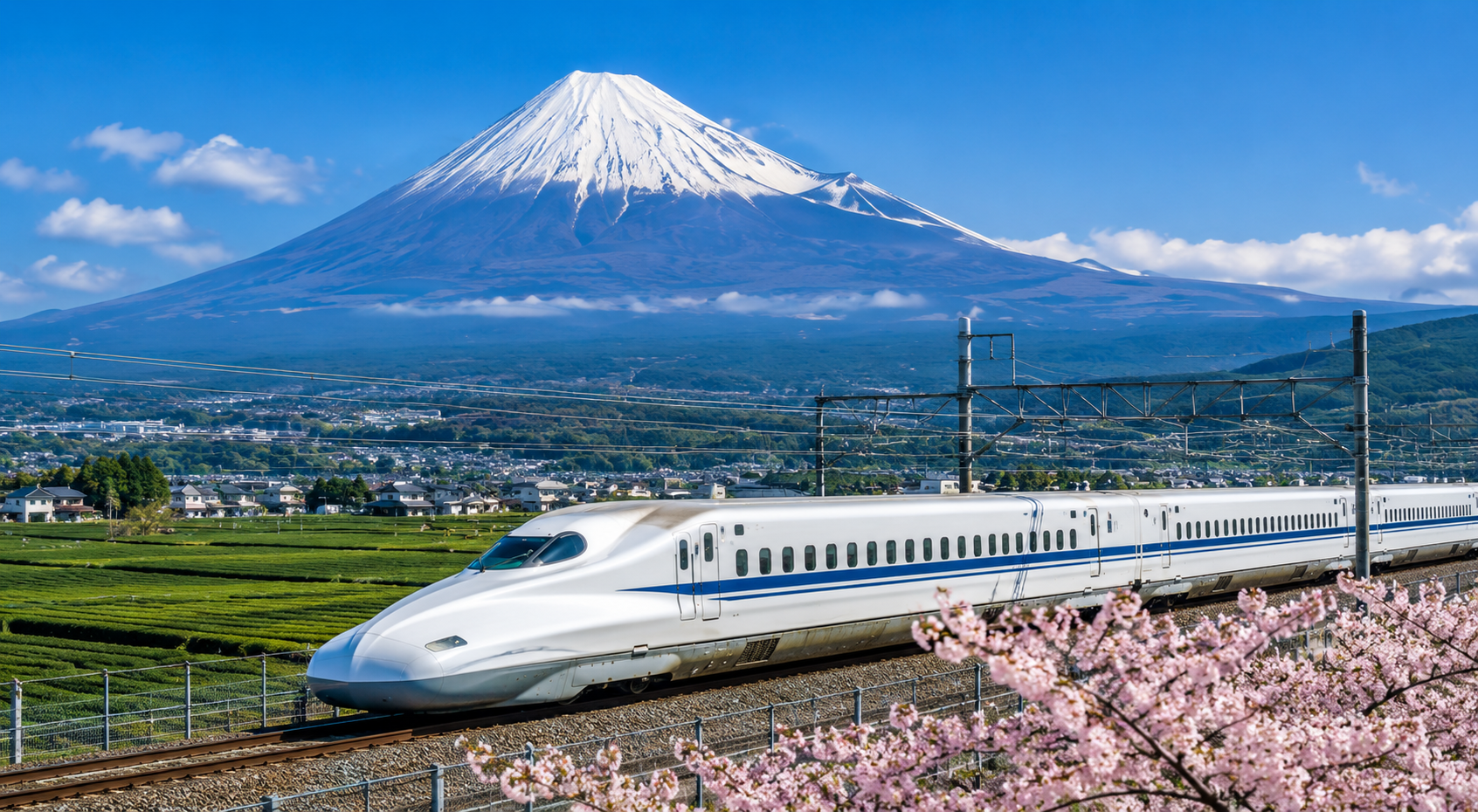
The shinkansen high-speed rail network connects many major cities, while conventional trains, metros and buses handle shorter journeys. Japan’s rail network is extensive and generally makes travelling between the country’s major tourist destinations straightforward.
Prepaid IC cards such as Suica and PASMO make local journeys much easier. Instead of purchasing an individual ticket every time you travel, you can tap in and out on participating transport networks. Compatible IC cards can also be used for purchases at many convenience stores, vending machines and other businesses.
Don’t automatically assume you need the nationwide Japan Rail Pass. Compare the cost of the journeys you actually intend to make with the relevant passes and individual tickets before buying.
Domestic flights can also make sense when travelling long distances, particularly if your itinerary includes places such as Hokkaido or Okinawa.
Japan’s official tourism website provides current transport information and travel updates
Japan Travel Costs and Currency
Japan uses the Japanese yen (¥ / JPY).
The country has a longstanding reputation for being extremely expensive, but that reputation can be misleading. Accommodation and long-distance transport can certainly add up, but inexpensive restaurants, public transport and free attractions make it possible to control daily spending surprisingly well.
As a rough planning guide for one traveller, Japan-guide suggests approximately:
- Low budget: ¥5,000–¥13,000 per day
- Mid-range: ¥13,000–¥28,000 per day
- Higher budget: ¥28,000+ per day
These figures cover accommodation, food and sightseeing but exclude transport between destinations, so a multi-city trip using the shinkansen will require an additional transport budget.
Accommodation is likely to be one of your biggest expenses. Hostels and simple hotels keep costs down, while traditional ryokan and high-end hotels can push the daily budget significantly higher.
Food offers plenty of opportunities to save. Ramen shops, noodle restaurants, curry restaurants, bakeries and convenience stores make eating relatively inexpensively quite easy.
Cards and cashless payments are increasingly widespread, particularly in cities, but Japan has not become completely cashless. Smaller businesses and establishments in rural areas may still require cash, so carrying some yen remains sensible.
Suggested Japan Itineraries
How long should you spend in Japan?
For most first-time visitors, 10 to 14 days is an excellent starting point.
7 Days in Japan
With only a week, resist the temptation to cover too much ground.
A Tokyo-focused trip with several day trips works well. Alternatively, combine Tokyo and Kyoto, accepting that you will only get an introduction to each.
Another option is to base yourself around Osaka and Kyoto and explore the wider Kansai region.
10 Days in Japan
Ten days gives you enough time for the classic first-time route:
Tokyo → Kyoto → Osaka
You could add a day trip to Nara or spend a night near Mount Fuji depending on your priorities.
This itinerary provides a strong mix of modern cities, traditional culture, food and historic attractions without requiring constant travel.
14 Days in Japan
Two weeks opens up considerably more possibilities.
Start with Tokyo before heading towards the Fuji area, Kyoto and Osaka. From there, continue west towards Hiroshima and Miyajima.
Alternatively, use the extra days to slow down rather than adding destinations. Spending longer in Tokyo and Kyoto, staying overnight in an onsen town or visiting the Japanese Alps can make the trip feel far less rushed.
Japan’s official tourism organisation similarly suggests that around 10 days to two weeks allows visitors to comfortably experience the classic Tokyo, Kyoto and Osaka route.
Practical Japan Travel Tips for First-Time Visitors
Japan is relatively straightforward to travel independently, but a few things are worth knowing before you arrive.
Learn a few Japanese phrases. English signage is common in major transport hubs and tourist areas, but English is not universally spoken. Translation apps are extremely useful.
Keep some cash with you. Card acceptance has improved significantly, but cash remains useful, particularly at smaller businesses and outside major cities.
Get an IC card. For most visitors spending time in major cities, being able to tap on and off local transport is considerably easier than repeatedly buying individual tickets.
Be aware of local etiquette. Japan has numerous social conventions that may be unfamiliar to first-time visitors. Avoid loud conversations on public transport, queue where indicated, and follow local rules at temples, shrines and onsens.
Don’t tip by default. Tipping is not generally part of everyday Japanese service culture.
Pack comfortable shoes. Exploring cities such as Tokyo and Kyoto often involves far more walking than expected.
Allow time for railway stations. Major stations can be enormous. Tokyo, Shinjuku, Shibuya and Osaka stations aren’t simply platforms—they can contain multiple railway operators, shopping centres, restaurants and numerous exits.
Don’t overpack your itinerary. Japan’s fast transport makes ambitious itineraries look possible on paper. That doesn’t mean they are enjoyable. Two nights in five different cities is rarely better than spending enough time to experience three properly.
Japan Travel Guide: How to Plan Your Trip
Japan rewards both careful planning and leaving room for discovery.
For a first trip, Tokyo, Kyoto and Osaka provide an excellent introduction, but they are only the beginning. Mountains, islands, hot-spring towns, historic villages and less-visited cities provide plenty of reasons to return.
Start by deciding when you want to travel and how many days you have. From there, choose a small number of priority destinations before working out the transport between them.
Most importantly, don’t try to see all of Japan in one visit.
You won’t.
And that’s a very good reason to come back.