Spain is one of Europe’s most varied travel destinations. Mediterranean beaches, historic cities, mountain landscapes, islands, world-famous food and centuries of culture all compete for space within the same country. That makes Spain an easy country to want to visit, but a surprisingly difficult one to narrow down when you start planning.
This Spain travel guide covers the essentials you need to plan your first trip, including where to go, the best time to visit, what you can expect to spend and how to get around. Whether you’re planning a weekend in Barcelona, a road trip through Andalusia, a beach holiday in the Balearic Islands or several weeks exploring different regions, Spain can accommodate almost every style of traveller.
It is also a country where trying to see everything can quickly become a mistake. Madrid, Barcelona, Seville, Granada and Valencia are only the beginning. Northern Spain, the Mediterranean coast, the Canary Islands and dozens of smaller cities and towns could easily fill several separate trips.
The key is deciding which version of Spain you want to experience first.
Table of Contents
Why Visit Spain?
Few European destinations offer quite as much variety within a single country.
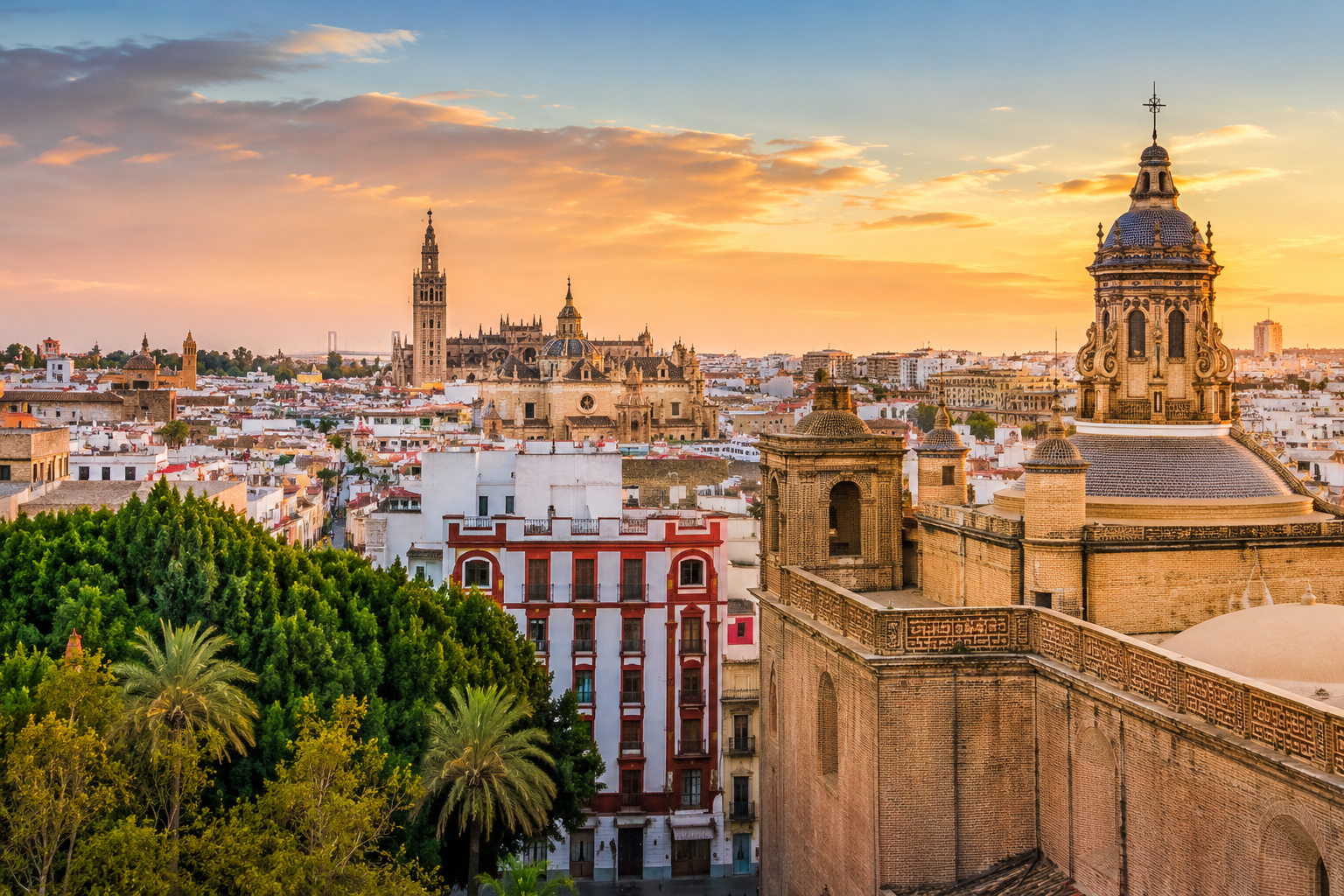
For city breaks, Madrid and Barcelona are obvious choices, but they are far from the only options. Seville offers palaces, plazas and Andalusian culture; Granada combines the Alhambra with a spectacular mountain backdrop; Valencia mixes historic streets with beaches and striking modern architecture; while Bilbao and San Sebastián provide a very different introduction to northern Spain.
Then there is the coastline. Spain has around 8,000 kilometres of it, stretching from the Mediterranean to the Atlantic. Add the Balearic and Canary Islands and you have everything from busy beach resorts to small coves and rugged Atlantic scenery.
Food is another reason to visit. Tapas may be the most internationally familiar part of Spanish cuisine, but food varies considerably by region. Paella is associated with Valencia, the Basque Country is famous for pintxos, Galicia is known for seafood, and Andalusia has its own distinctive dishes and tapas culture.
Spain also works particularly well for independent travel. Major cities have extensive public transport networks, while high-speed trains make it possible to combine several destinations without hiring a car.
Perhaps most importantly, Spain doesn’t require one particular style of holiday. You can spend a week visiting museums and historic buildings, another lying beside the Mediterranean and another hiking through mountains — and all three trips could look completely different.
Top Places to Visit in Spain
Spain has far too many worthwhile destinations to cover properly in a general country guide, but several stand out when planning a first visit.
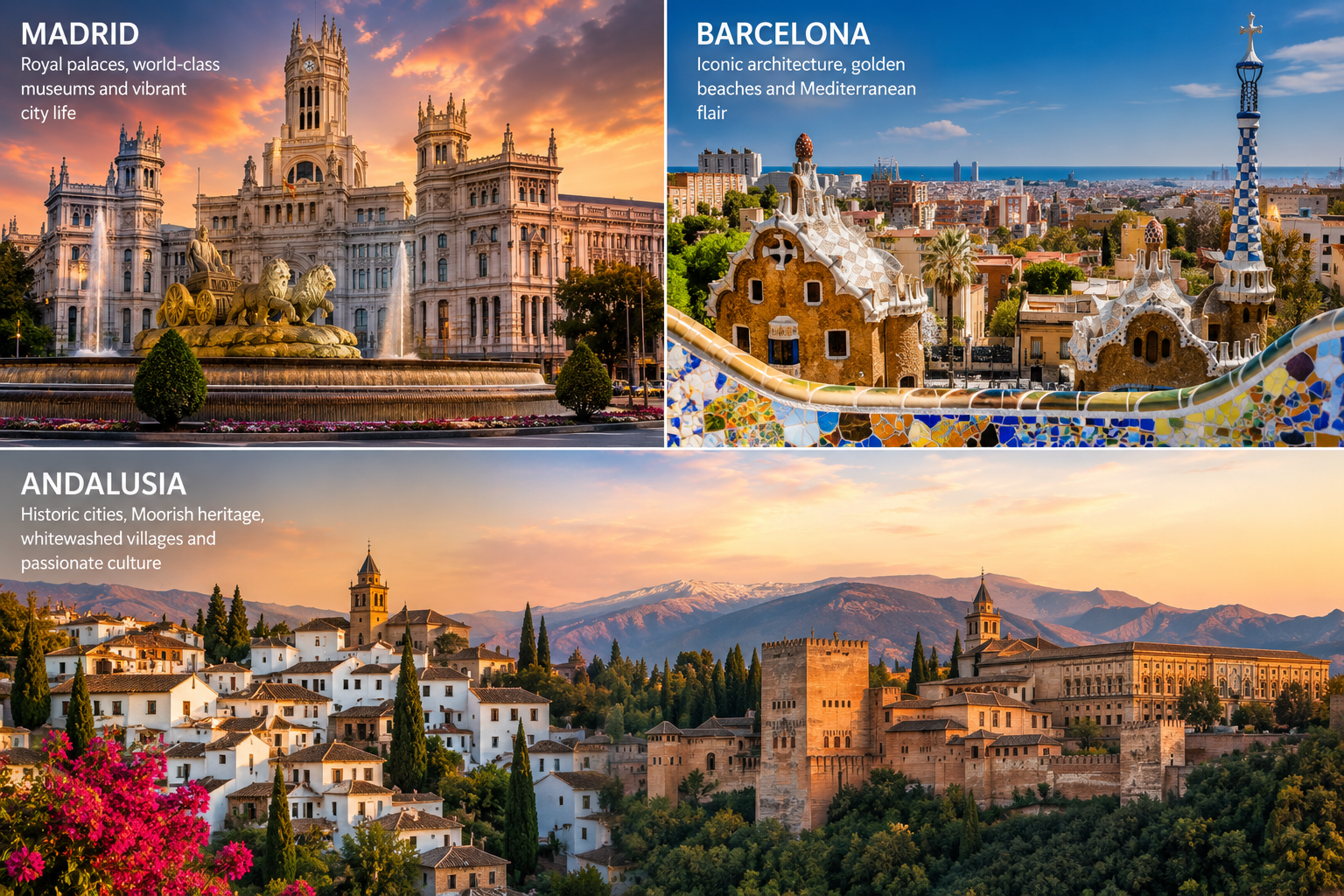
Madrid
Spain’s capital is an excellent starting point, particularly if you want art, history, food and nightlife.
The Prado Museum, Royal Palace, Retiro Park and Plaza Mayor provide plenty of major sights, but Madrid is also a city to experience rather than simply work through a sightseeing checklist. Neighbourhoods such as La Latina and Malasaña are ideal for wandering, eating and stopping whenever somewhere looks interesting.
Madrid’s central location also makes it a useful base for exploring other parts of Spain.
Barcelona
Barcelona combines many of the things travellers want from Spain in one destination: architecture, history, restaurants, nightlife and beaches.
Gaudí’s Sagrada Família and Park Güell are the headline attractions, but the Gothic Quarter, La Rambla, markets and Mediterranean waterfront give you plenty more to explore.
It can be extremely busy, particularly during peak periods, but Barcelona remains one of the most rewarding cities in Spain for a first-time visitor.
Seville
Seville feels very different from both Madrid and Barcelona.
The capital of Andalusia is known for flamenco, tapas, orange-tree-lined streets and spectacular architecture. The Real Alcázar, Seville Cathedral and Plaza de España are the obvious highlights, but simply walking through the historic centre is part of the experience.
Spring and autumn are particularly attractive because temperatures can become extremely high during summer.
Granada
Granada’s main attraction is the Alhambra, one of Spain’s most extraordinary historic sites.
But the city deserves more than a rushed overnight visit. The old Albaicín neighbourhood, views towards the Sierra Nevada and Granada’s tapas culture make it a worthwhile destination in its own right.
Valencia
Valencia is a strong alternative if you like the idea of combining a city break with time beside the sea.
Its historic centre contrasts dramatically with the futuristic City of Arts and Sciences, while the city’s location on the Mediterranean provides easy access to beaches. Valencia is also the birthplace of paella, giving food another prominent role in a visit.
Northern Spain
Don’t assume Spain is all dry landscapes and Mediterranean beaches.
Galicia, Asturias, Cantabria and the Basque Country offer greener scenery, mountains and a dramatic Atlantic coastline. Cities such as Bilbao and San Sebastián are particularly appealing to travellers interested in food and culture.
The Spanish Islands
The Balearic Islands — including Mallorca, Menorca and Ibiza — are popular Mediterranean holiday destinations, but each offers considerably more than beaches.
Further south, the Canary Islands have a completely different landscape and climate. Their position off the northwest coast of Africa makes them particularly appealing for winter sun.
Spain Travel Guide: Best Time to Visit
There isn’t a single best time to visit Spain because conditions vary significantly between regions.
For general sightseeing, spring and autumn are arguably the easiest seasons. Temperatures tend to be comfortable enough for exploring cities on foot, while avoiding some of the intense heat associated with July and August.
Summer is the obvious choice for a traditional beach holiday, particularly along the Mediterranean and in the Balearic Islands. However, it is also peak travel season and some inland and southern destinations can become extremely hot.
Winter is more complicated. Madrid and inland areas can be surprisingly cold, while northern Spain receives more rain. Southern Spain remains comparatively mild, and the Canary Islands are a particularly good option for winter sunshine.
Your ideal time therefore depends heavily on your itinerary. A July trip to Mallorca and a July sightseeing holiday in Seville are two very different propositions.
Weather & Climate in Spain
Spain’s climate is more varied than its reputation for year-round sunshine might suggest.
The country receives roughly 3,000 hours of sunshine annually, but there are substantial regional differences.
Mediterranean areas generally experience hot, dry summers and relatively mild winters. Inland Spain has greater temperature extremes, with hot summers but considerably colder winters. Northern regions such as Galicia, Asturias and Cantabria are cooler and wetter, which is also why the landscapes are noticeably greener.
Southern inland areas can become particularly hot during July and August, with temperatures exceeding 30°C common during summer. This is worth considering if your itinerary involves extensive sightseeing rather than beaches and swimming pools.
The Canary Islands are the major exception, offering comparatively mild temperatures throughout the year.
Don’t choose your travel dates based solely on the word “Spain”. Check the climate for the specific regions you’re planning to visit.
Getting There & Getting Around Spain
Spain is well connected to the rest of Europe and has major international airports serving cities including Madrid, Barcelona, Málaga, Alicante and Palma de Mallorca.
Once you’re there, travelling between the major cities is relatively straightforward.
Spain has an extensive high-speed rail network, and many journeys are short enough to make trains more attractive than flying. Madrid to Barcelona takes around 2½ hours by high-speed train, as does Madrid to Seville, while Madrid to Valencia can take around 1 hour 40 minutes.
That makes routes such as Madrid–Seville–Córdoba particularly easy to arrange without a car.
Buses are useful for smaller destinations that aren’t well served by rail, while domestic flights become more practical when covering very long distances or travelling to the Balearic or Canary Islands.
Car hire is most useful when exploring rural areas, smaller villages or regions where public transport is limited.
For a trip focused entirely on major cities, however, you probably won’t need one.

Travel Costs & Currency
Spain uses the euro (€), and cards are widely accepted in cities and most tourist areas. Carrying a small amount of cash is still useful for smaller purchases, markets and businesses outside the major tourist centres.
How expensive Spain feels depends heavily on where and how you travel.
Barcelona, Madrid and popular island resorts can become expensive, particularly for accommodation during peak periods. Smaller cities and inland destinations can offer considerably better value.
As a rough planning guide, excluding your international flights:
- Budget traveller: around €60–€90 per person per day
- Mid-range traveller: around €120–€200 per person per day
- Higher-end traveller: €250+ per person per day
These aren’t fixed costs. Accommodation can dramatically change the calculation, particularly if you’re travelling alone rather than splitting a room.
Food doesn’t necessarily need to be expensive. Eating away from major tourist areas, making lunch your main meal and looking for menú del día offers can help keep costs down.
Rail fares also vary, so booking long-distance trains in advance can be worthwhile.
Suggested Spain Itineraries
How much Spain you should try to cover depends on how long you have.
7 Days in Spain
With one week, resist the temptation to cross the entire country.
Two destinations generally provide a better experience than four rushed ones. Madrid and Seville make an excellent combination, as do Barcelona and Valencia.
Another option is to spend the full week in Andalusia, combining Seville with Granada and perhaps Córdoba.
10 Days in Spain
Ten days gives you enough time for three destinations without spending the entire holiday travelling.
One classic route would be:
Madrid → Seville → Granada
Alternatively:
Barcelona → Valencia → Madrid
Both provide very different introductions to the country.
Two Weeks in Spain
Fourteen days gives you considerably more freedom.
You could combine Madrid with Andalusia, spend two weeks exploring northern Spain, travel down the Mediterranean coast or create a broader route linking Barcelona, Madrid and southern Spain.
The extra days also allow you to include smaller towns and day trips instead of simply moving between major cities.
Whatever itinerary you choose, avoid treating Spain like a checklist. An extra night in a destination you enjoy will usually add more to your holiday than another three-hour train journey just to say you’ve visited one more city.
Practical Travel Tips for Spain
A few practical details can make travelling in Spain considerably easier.
Language: Spanish is spoken throughout the country, but it isn’t Spain’s only language. Catalan, Galician, Basque and Valencian are also spoken in their respective regions. English is common in many tourist areas, but learning a few basic Spanish phrases is always useful.
Eating times: Spanish schedules can be later than visitors from northern Europe or North America expect. Lunch often takes place in the afternoon, while dinner can start considerably later than you may be used to.
Safety: Spain is generally considered a safe destination for travellers, but petty theft can be an issue in busy tourist areas. Keep an eye on phones, wallets and bags, particularly on crowded public transport and around major attractions.
Electricity: Spain uses Type C and Type F plugs and a 230V supply. Travellers from the UK will need a plug adapter.
Internet and mobile data: Wi-Fi is widely available in hotels, cafés and restaurants. Visitors with EU mobile plans may have roaming included, while travellers from elsewhere should check roaming charges or consider an eSIM or local SIM.
Booking attractions: Major attractions can sell out, particularly during busy periods. If visiting places such as the Alhambra or Sagrada Família is essential to your trip, don’t leave tickets until the day you arrive.
For current practical information, entry requirements and official travel advice within Spain, you can also check Spain’s official tourism website.
High-speed trains: Advance booking can provide better fares and more choice of departure times, especially on popular routes.
Plan Your Trip to Spain
Spain is the kind of destination that becomes more interesting the more you explore it.
For a first trip, don’t worry about seeing everything. Decide whether cities, beaches, history, food, countryside or a mixture of them matters most to you, and build your itinerary around that.
Madrid, Barcelona and Andalusia provide an excellent introduction, but they are only part of what Spain offers. Northern Spain, the Mediterranean coast, smaller historic cities and the islands give you plenty of reasons to return.
Use this Spain travel guide as your starting point, then explore the more detailed destination, transport, weather and itinerary guides as you narrow down where you want to go.
Spain isn’t a country you need to complete in one trip — and that’s one of the best things about it.