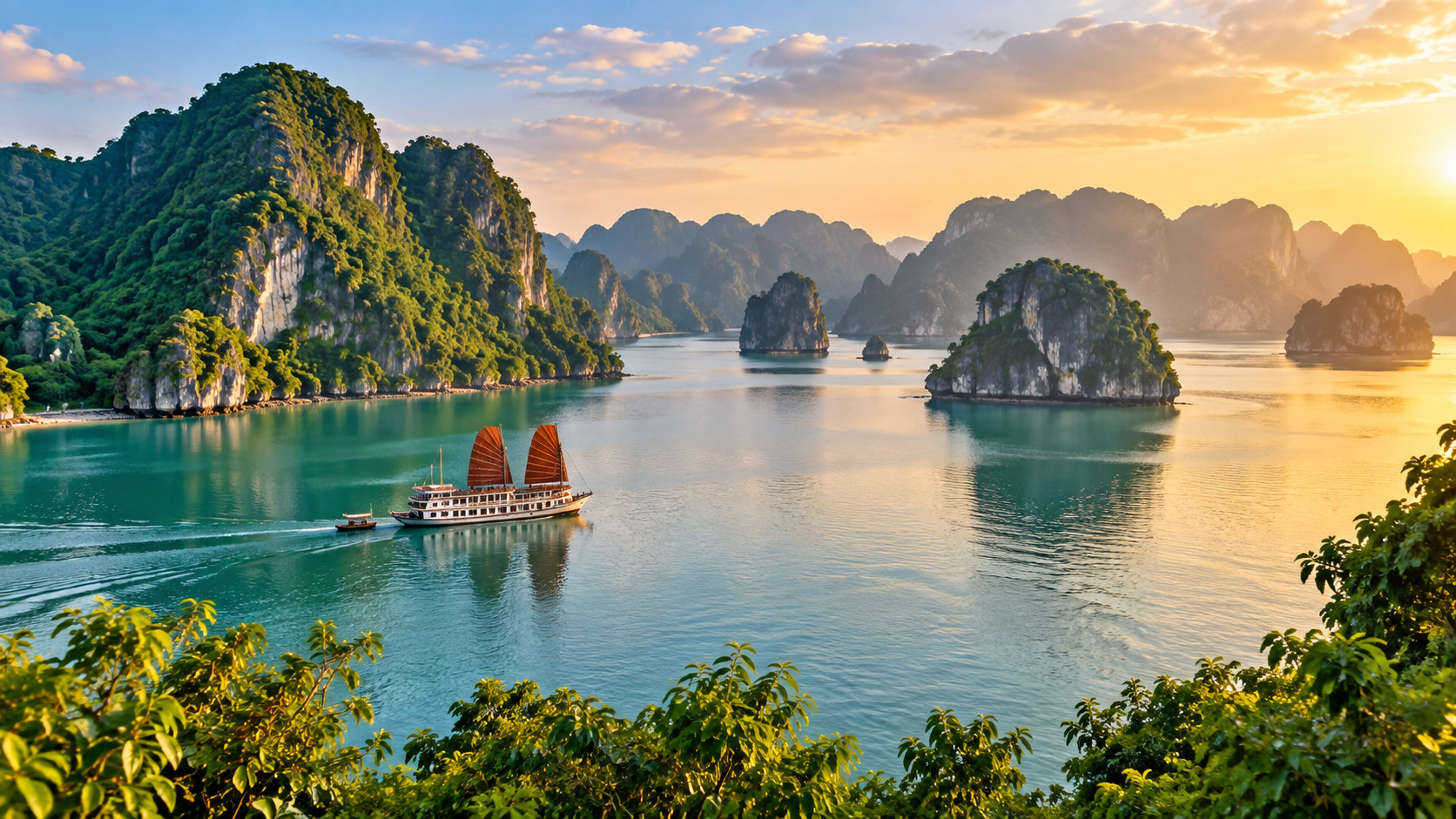
Vietnam is a country of dramatic landscapes, energetic cities, historic towns and some of Southeast Asia’s most celebrated food, making it an excellent destination for first-time visitors to the region as well as more experienced travellers. This Vietnam travel guide covers the essentials you need to start planning a trip, whether you have a week to explore or several weeks to travel from north to south.
Few countries pack quite as much variety into one journey. You can wander through the busy streets of Hanoi, cruise between limestone islands in Ha Long Bay, explore the lantern-lit lanes of Hoi An, discover the imperial history of Hue and finish among the skyscrapers and markets of Ho Chi Minh City. Beyond the major stops are mountain landscapes, enormous caves, tropical beaches and the waterways of the Mekong Delta.
Vietnam is also relatively easy to travel around, with domestic flights, trains and an extensive network of buses connecting the country’s main destinations.
This guide provides an overview of the best places to visit in Vietnam, when to go, what travelling there costs and how to put together an itinerary.
Table of Contents
Why Visit Vietnam?
One of Vietnam’s greatest strengths is variety.
Stretching for more than 1,600 kilometres from north to south, the country crosses several climate zones and landscapes. Northern Vietnam offers mountains, rice terraces and the limestone formations of places such as Ha Long Bay and Ninh Binh. Central Vietnam combines historic cities with beaches and national parks, while southern Vietnam brings together the energy of Ho Chi Minh City, the waterways of the Mekong Delta and tropical islands such as Phu Quoc.
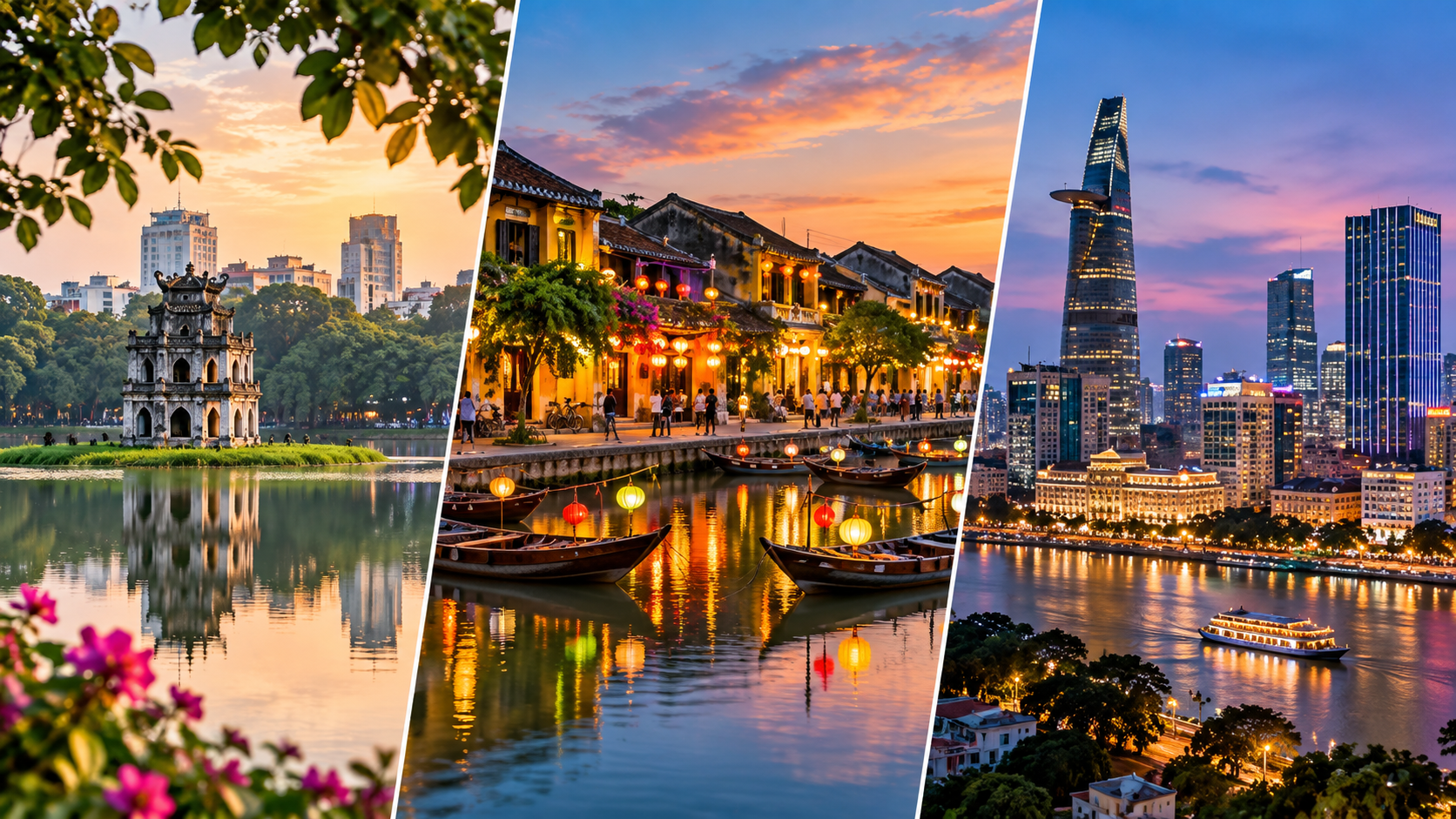
Vietnam’s cities are equally varied. Hanoi feels historic and atmospheric, with lakes, temples, narrow streets and a thriving street-food culture. Ho Chi Minh City is larger, faster and more modern, while Hoi An offers an entirely different experience centred on its preserved old town.
Then there is the food.
Pho may be Vietnam’s most internationally recognised dish, but travelling through the country reveals just how regional Vietnamese cuisine can be. Banh mi, bun cha, cao lau, banh xeo, com tam and countless noodle dishes mean that eating becomes part of the travel experience rather than simply something you do between attractions.
Vietnam remains good value too. Accommodation, local food and everyday transport can still be inexpensive compared with many international destinations, allowing travellers to choose between genuinely budget-friendly trips and surprisingly affordable higher-end experiences.
Top Places to Visit in Vietnam
Trying to see everything in Vietnam on one trip is difficult. Distances are larger than they first appear on a map, so choosing a sensible route is more important than squeezing in every destination.
Hanoi
Vietnam’s capital is one of the best places to begin a first visit.
The Old Quarter is a maze of narrow streets filled with food stalls, cafés, shops and motorcycles, while nearby Hoan Kiem Lake provides a calmer centre to the city. Hanoi is also home to major cultural and historic attractions including the Temple of Literature, museums, pagodas and colonial-era architecture.
Just as importantly, Hanoi provides an excellent base for exploring northern Vietnam.
Ho Chi Minh City
At the opposite end of the country, Ho Chi Minh City offers Vietnam at a completely different pace.
Modern towers rise above markets, cafés and older neighbourhoods, creating a city where the country’s past and rapid economic development sit side by side. Popular attractions include the War Remnants Museum, Independence Palace and Ben Thanh Market.
The city is also a common starting point for excursions to the Cu Chi Tunnels and the Mekong Delta.
Hoi An
Hoi An is one of Vietnam’s most atmospheric destinations.
Its historic centre is known for traditional architecture, colourful lanterns and riverside streets that are particularly attractive after dark. The surrounding area adds beaches, rice fields and countryside that can easily be explored by bicycle.
Hoi An is often combined with nearby Da Nang, whose airport makes this part of central Vietnam easy to reach from both Hanoi and Ho Chi Minh City.
Hue
Once the seat of Vietnam’s Nguyen emperors, Hue is the country’s standout destination for imperial history.
The enormous Imperial City is the main attraction, but royal tombs, pagodas and sites along the Perfume River make Hue worth more than a quick stop. It also fits naturally into a central Vietnam route between Hoi An and destinations farther north.
Ha Long Bay
Ha Long Bay’s towering limestone karsts rising from the water create one of Vietnam’s most recognisable landscapes.
Most visitors explore the area on a boat trip or overnight cruise from northern Vietnam. Nearby Lan Ha Bay offers similar scenery and can be considered as an alternative when planning your route.
Ninh Binh
If Ha Long Bay’s scenery appeals to you, Ninh Binh deserves serious consideration.
Here, limestone peaks rise above rivers, rice fields and rural landscapes rather than the sea. Boat journeys through Trang An or Tam Coc take visitors between cliffs and caves, while viewpoints such as Hang Mua provide spectacular views across the surrounding countryside.
Sapa and the Northern Highlands
Northern Vietnam becomes increasingly mountainous as you approach the Chinese border.
Sapa is the best-known base for exploring this region, offering trekking, terraced rice fields and access to surrounding villages. Travellers willing to venture farther can also explore destinations such as Ha Giang, where some of Vietnam’s most dramatic mountain scenery can be found.
Phong Nha
Phong Nha is one of Vietnam’s best destinations for nature and adventure.
The region is famous for its enormous cave systems, limestone mountains and jungle scenery. Activities range from relatively accessible cave visits and boat trips to demanding multi-day expeditions.
The Mekong Delta
South of Ho Chi Minh City, the Mekong breaks into a huge network of rivers and waterways before reaching the sea.
Can Tho and smaller towns throughout the delta provide a very different experience from Vietnam’s major cities, with river journeys, agricultural landscapes, local markets and communities built around the waterways.
Best Time to Visit Vietnam
There isn’t one perfect month for every part of Vietnam because the country stretches across several distinct climate zones.
For travellers visiting multiple regions, March to May is one of the strongest overall periods, with Vietnam’s official tourism information highlighting these months as offering some of the best weather countrywide.
Northern Vietnam generally experiences cooler conditions during winter, followed by warmer spring weather and a hot, humid summer. Mountain areas can become surprisingly cool during the winter months.
Central Vietnam follows a different pattern. Destinations such as Hue tend to be sunnier from around March through August, while the later months of the year can bring significantly wetter conditions.
Southern Vietnam stays warm throughout the year, with a clearer distinction between dry and rainy periods rather than summer and winter.
This regional variation means the best time to travel depends heavily on your route. A traveller spending two weeks in northern Vietnam may therefore choose a completely different month from someone planning a beach holiday in central or southern Vietnam.
Check Vietnam’s official tourism information when planning around seasonal conditions and major events.
Weather and Climate in Vietnam
Vietnam’s long, narrow geography is the reason its weather can be confusing.
In the north, Hanoi has distinct seasonal changes and the mountainous regions become considerably cooler than the rest of the country. Summers are typically hot and humid, while winter can feel cool, particularly in higher areas.
Central Vietnam is generally warm but has its own rainy season. Hue, for example, can experience heavy rain later in the year, while March through August tends to bring warmer and sunnier conditions.
Southern destinations such as Ho Chi Minh City and the Mekong Delta remain warm throughout the year. Rain becomes more frequent during the wet season, but this does not necessarily mean continuous rain all day. Tropical downpours can be intense but relatively short.
Because conditions vary so much, check the climate for the individual destinations on your itinerary rather than relying on a single nationwide forecast.
Getting to and Around Vietnam
Most international travellers arrive through one of Vietnam’s major airports, particularly Noi Bai International Airport in Hanoi or Tan Son Nhat International Airport in Ho Chi Minh City. Da Nang is another useful international gateway, especially for travellers concentrating on central Vietnam.
Once you’re in the country, there are several ways to travel between destinations.
Domestic flights are useful when covering large distances. Flying between Hanoi, central Vietnam and Ho Chi Minh City can save a considerable amount of time on shorter trips.
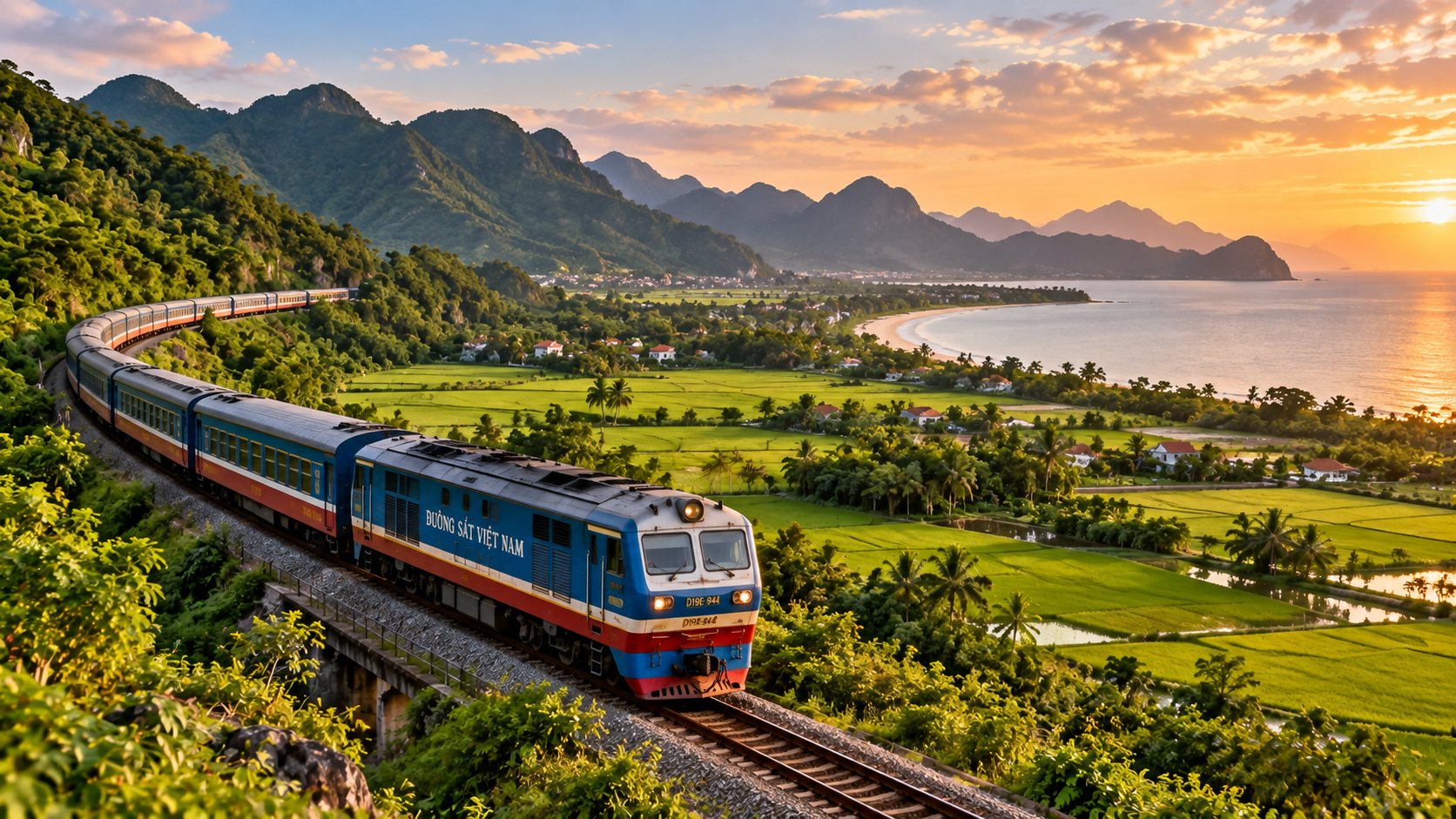
Trains offer a slower but more scenic alternative. Vietnam’s main railway runs along much of the country and connects many important destinations.
Buses and sleeper buses reach an even wider network of towns and tourist destinations and are particularly useful for budget travellers.
Within cities, taxis and ride-hailing services are widely used, while walking is often the easiest way to explore compact historic centres such as Hoi An.
Vietnam’s shape makes route planning particularly important. Travelling repeatedly backwards and forwards can waste days, so most first-time itineraries work best by progressing broadly north to south or south to north.
Vietnam Travel Costs and Currency
Vietnam’s currency is the Vietnamese dong (VND).
Cash remains useful, particularly for street food, markets, smaller shops and local businesses, although cards are increasingly accepted by hotels, restaurants and larger businesses in major tourist destinations.
Vietnam can accommodate very different travel budgets. As a broad 2026 planning range, a budget traveller might spend roughly US$30–50 per person per day, while a comfortable mid-range trip is more likely to fall around US$80–150 per day. Higher-end hotels, private tours, premium cruises and frequent domestic flights can push costs considerably higher.
These figures should be treated as planning ranges rather than fixed budgets. Your actual spending will depend heavily on accommodation, how frequently you move between destinations and the activities you choose.
Some experiences can have a disproportionate impact on the total. An overnight Ha Long Bay cruise, guided excursions, domestic flights or multi-day adventure tours can cost considerably more than an ordinary day exploring independently.
Food, on the other hand, can remain remarkably affordable if you eat at local restaurants and street-food stalls.
Suggested Vietnam Itineraries
How much of Vietnam you should attempt to see depends on the length of your trip.
7 Days in Vietnam
With only one week, concentrate on one region rather than trying to travel the entire country.
A northern itinerary could combine Hanoi, Ninh Binh and Ha Long Bay, giving you a mix of city life, countryside and Vietnam’s famous limestone scenery.
Alternatively, spend the week in central Vietnam combining Hue, Hoi An and Da Nang.
10 Days in Vietnam
Ten days gives you enough time to combine two regions.
One option is Hanoi → Ha Long Bay → Hoi An/Da Nang → Ho Chi Minh City.
This provides an excellent introduction to the country, although you will need to use domestic flights if you want to avoid spending too much of the trip in transit.
Vietnam’s official tourism site uses a similar ten-day highlights route, combining Hanoi and Ha Long Bay in the north, Hoi An and Hue in central Vietnam, and Ho Chi Minh City and the Mekong Delta in the south.
2 Weeks in Vietnam
Two weeks is a much better length for a first north-to-south trip.
A possible route is:
Hanoi → Ninh Binh → Ha Long Bay → Hue → Hoi An → Ho Chi Minh City → Mekong Delta
You could swap Ninh Binh for Sapa if mountain trekking is a priority, or add Phong Nha if caves and outdoor activities appeal more than cities.
Even with two weeks, resist the temptation to add too many stops. Vietnam rewards slower travel, and spending two or three nights somewhere is usually more enjoyable than constantly checking in and out of hotels.
Practical Vietnam Travel Tips
A little preparation makes travelling around Vietnam considerably easier.
Language: Vietnamese is the official language. English is commonly encountered in hotels and established tourist businesses, but learning a few Vietnamese words and keeping addresses saved on your phone can be useful.
Money: Carry some Vietnamese dong even if you primarily use cards. Small restaurants, street vendors and markets may still rely on cash.
Crossing the road: Traffic in Hanoi and Ho Chi Minh City can initially appear chaotic, particularly because of the number of motorcycles. Use pedestrian crossings where available, move predictably and pay close attention to local traffic.
Connectivity: SIM cards and eSIMs make it easy to stay connected, and mobile data is particularly useful for navigation, translation and transport apps.
Transport distances: Vietnam is bigger than many first-time visitors expect. Check actual journey times rather than judging distances from a map.
Entry requirements: Visa and passport requirements depend on your nationality and can change. British citizens, for example, can currently visit Vietnam visa-free for tourism or business for up to 45 days, while Vietnam’s official e-visa system allows eligible travellers to apply for stays of up to 90 days. Always verify the rules for your passport shortly before travelling.
Travel insurance: Make sure your policy covers the activities you intend to do, particularly if your trip includes motorcycling, trekking or adventure activities.
Vietnam Travel Guide: Planning Your Trip
Vietnam works particularly well for travellers who enjoy variety. Few trips can combine historic cities, tropical beaches, mountain scenery, enormous caves, river deltas and world-famous food so easily.
The main challenge isn’t finding enough things to do — it’s deciding what to leave out.
For a first visit, focus on a manageable route and allow enough time to experience each destination rather than simply travelling between them. Hanoi, Ha Long Bay, central Vietnam and Ho Chi Minh City provide an excellent introduction, while Ninh Binh, Sapa, Phong Nha and the Mekong Delta allow you to tailor the trip towards nature, adventure or slower travel.
As more Vietnam guides are added, this page will act as the starting point for planning your trip, with detailed guides covering weather, transport, costs and itineraries.