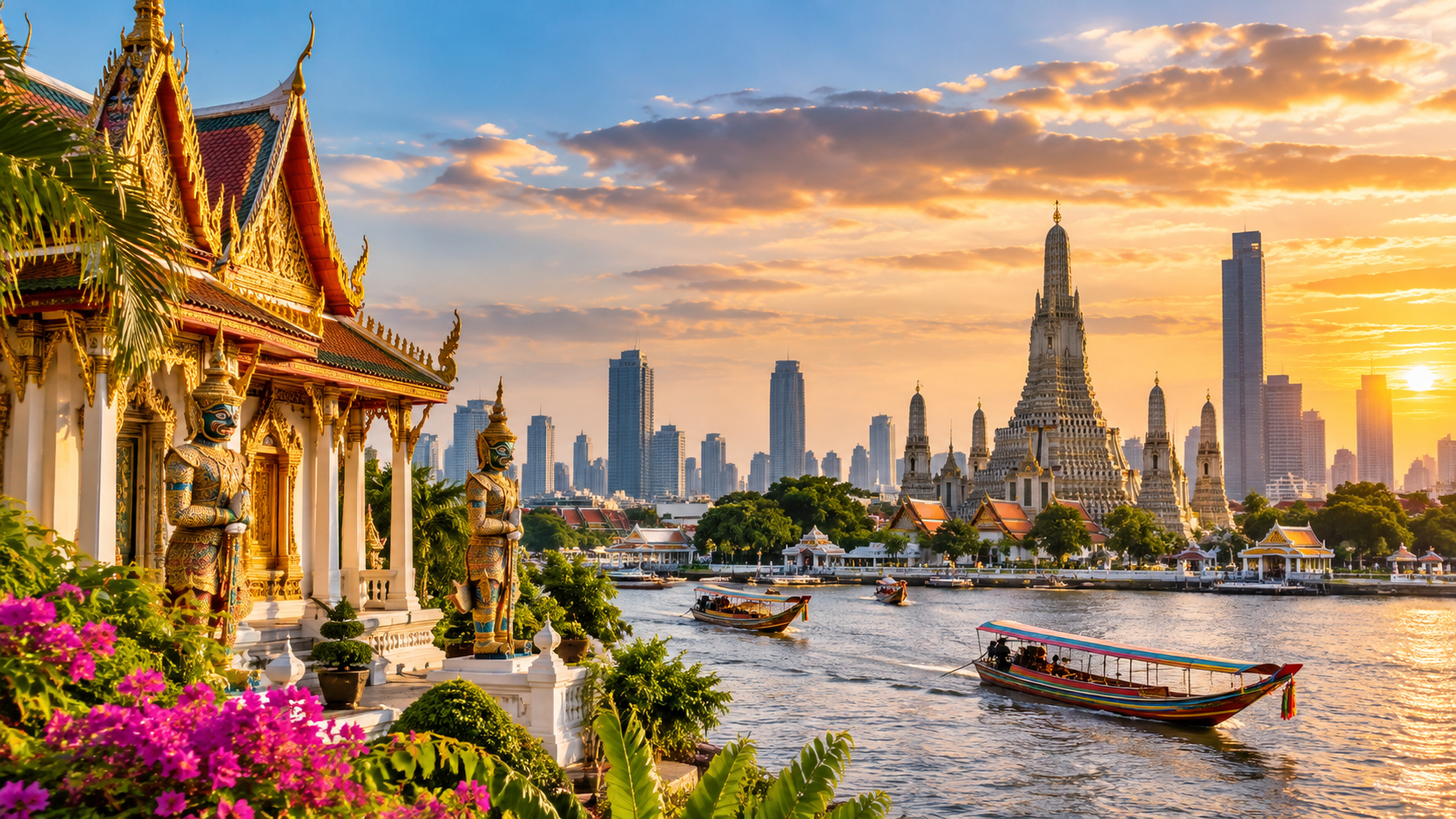
Thailand combines tropical beaches, energetic cities, ancient temples, mountain landscapes and some of Southeast Asia’s most famous food. This Thailand travel guide covers the essentials you need to start planning your trip, whether you’re visiting for a week-long holiday, a two-week adventure or a longer journey through Southeast Asia.
One of Thailand’s greatest strengths is its variety. You can spend your morning exploring ornate temples in Bangkok, wander through night markets in Chiang Mai, discover ancient ruins at Ayutthaya or escape to islands surrounded by clear tropical water. Just as importantly, Thailand has a well-established tourism infrastructure, making it relatively easy to travel around independently.
It can also accommodate very different travel styles. Backpackers have been travelling through Thailand for decades, but the country is equally suited to couples, families and travellers looking for luxury resorts.
This guide gives you an overview of the best places to visit in Thailand, when to go, how to get around, what a trip is likely to cost and how you might structure your itinerary.
Table of Contents
Why Visit Thailand?
Few destinations offer quite as much variety within a single trip.
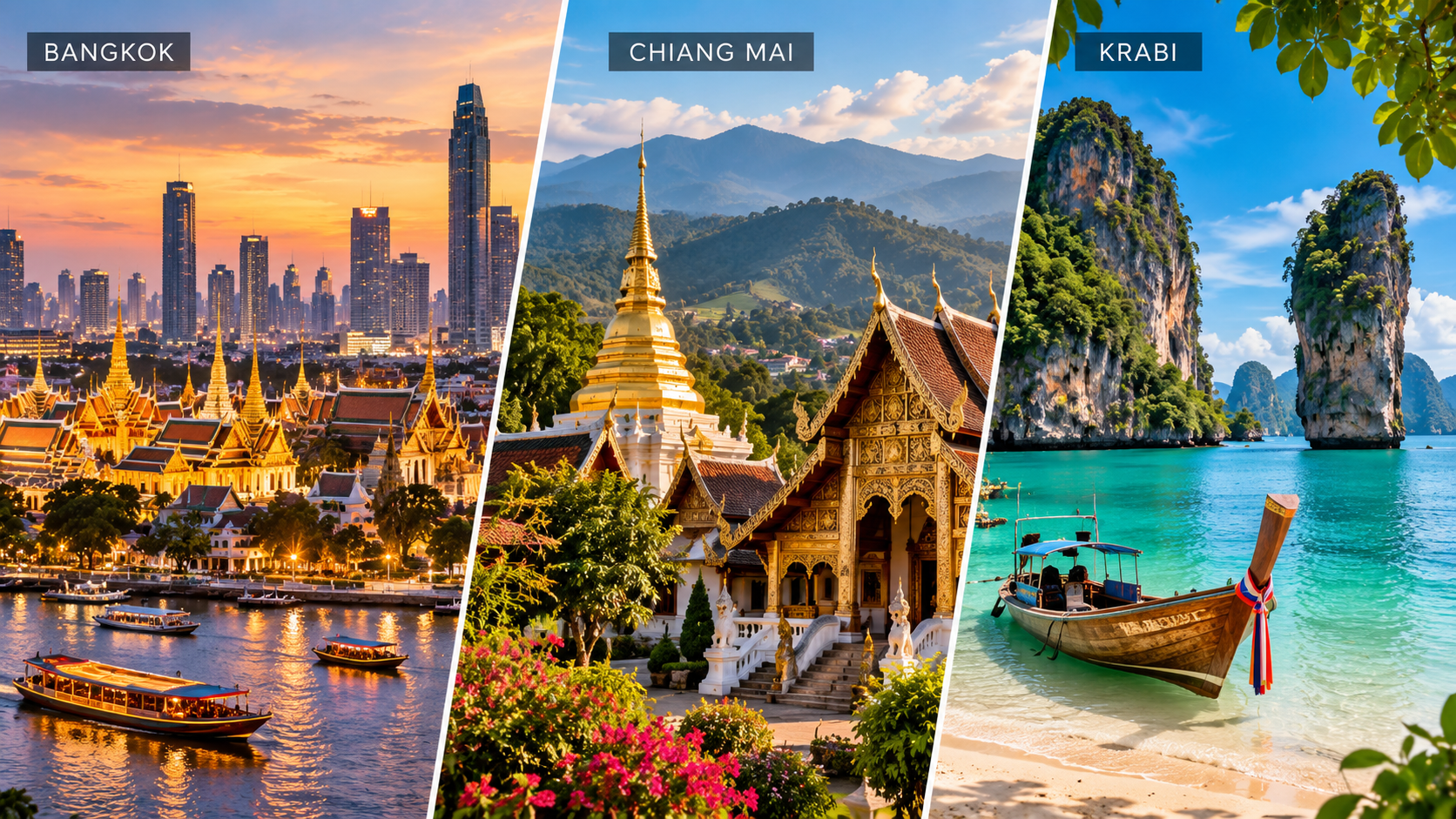
Bangkok provides the classic introduction. Thailand’s sprawling capital mixes temples and palaces with skyscrapers, enormous shopping centres, street-food stalls and busy nightlife. It can initially feel chaotic, but that energy is part of its appeal.
Head north and the atmosphere changes considerably. Chiang Mai is surrounded by mountains and is known for its temples, markets and more relaxed pace. Northern Thailand also offers hiking, national parks and smaller towns for travellers who want to move beyond the country’s major tourist centres.
Then there are the beaches.
Thailand has an enormous choice of coastal destinations and islands, from established resort areas such as Phuket and Koh Samui to dramatic limestone scenery around Krabi and smaller islands where the pace is considerably slower.
Food is another reason to visit. Pad Thai and green curry may be the internationally familiar dishes, but travelling through Thailand reveals far more regional variation, from northern khao soi to spicy salads, grilled meats, seafood and an extraordinary range of inexpensive street food.
Thailand also remains a destination where travellers can choose how much they want to spend. Budget guesthouses, local restaurants and public transport sit alongside five-star hotels, rooftop restaurants and luxury beach resorts.
That combination of culture, food, landscapes, beaches and flexibility makes Thailand particularly attractive to first-time visitors to Southeast Asia.
Top Places to Visit in Thailand
Trying to see everything in one trip is one of the easiest mistakes to make. Thailand stretches more than 1,500 kilometres from north to south, so choosing a few areas usually produces a better trip than constantly moving between destinations.
Bangkok
For most visitors, Bangkok is the natural starting point.
The capital is home to some of Thailand’s best-known sights, including the Grand Palace, Wat Pho and Wat Arun. The Chao Phraya River runs through the city and provides both useful transport and a different perspective on Bangkok’s mixture of old and new.
But Bangkok isn’t only about sightseeing. Markets, street food, shopping, nightlife and neighbourhoods ranging from historic districts to ultra-modern commercial areas make it worth spending at least a few days here rather than simply using the city as an arrival point.
Chiang Mai
Chiang Mai offers a very different experience.
Located in northern Thailand, the city is famous for its temples, night markets and surrounding mountain scenery. Its historic old city is compact enough to explore easily, while day trips can take you into the mountains and countryside beyond.
Chiang Mai is particularly appealing if you want to combine Thai culture, food and outdoor experiences without Bangkok’s intensity.
Phuket
Phuket is Thailand’s largest island and one of its most developed beach destinations.
It has a huge range of accommodation, restaurants and activities, making it an easy choice for travellers who want beaches without giving up tourist infrastructure. Different parts of the island offer very different experiences, from busy resort centres to quieter beaches.
Phuket also works well as a base for exploring the Andaman coast.
Krabi
Krabi is famous for towering limestone cliffs, turquoise water and island-dotted coastal scenery.
Ao Nang is the main tourist base, while nearby Railay Beach has one of Thailand’s most recognisable landscapes. Boat trips provide access to surrounding islands and beaches, making Krabi a strong alternative to Phuket if scenery and island hopping are higher priorities than nightlife and large resorts.
Koh Samui and the Gulf Islands
Koh Samui offers beaches, resorts and a wide range of restaurants and activities, while nearby Koh Phangan and Koh Tao provide very different experiences.
Koh Phangan is famous for its Full Moon Party but has many quieter beaches away from the main nightlife areas. Koh Tao is particularly well known for diving and snorkelling.
Ayutthaya
If you want to add more history to your trip, Ayutthaya is one of the easiest options.
The former capital of the Kingdom of Siam lies north of Bangkok and contains an extensive collection of temple ruins and historic sites. Its proximity to Bangkok makes it possible to visit as a day trip, although staying overnight gives you more time to explore.
Best Time to Visit Thailand
For many travellers, November to February is the easiest period to visit Thailand. Temperatures are generally more comfortable, humidity tends to be lower and many popular destinations experience relatively dry weather.
Unsurprisingly, this is also peak tourist season. Popular beaches and islands can be busy and accommodation prices tend to rise, particularly around Christmas and New Year.
March to May is generally hotter, with April often bringing particularly intense heat. The Thai New Year festival of Songkran takes place in April, however, and can make this an especially memorable time to visit.
Much of Thailand experiences its wetter period roughly between May and October. This doesn’t necessarily mean continuous rain: tropical downpours can be intense but relatively short. Travelling during this period can mean fewer tourists and lower accommodation prices.
The important complication is that Thailand’s weather varies by region. The Gulf coast around Koh Samui does not follow exactly the same rainfall pattern as Phuket, Krabi and the Andaman coast.
Weather and Climate in Thailand
Thailand has a tropical climate, so expect warm temperatures for most of the year.
Rather than thinking in terms of the four seasons familiar in much of Europe and North America, it is more useful to think broadly in terms of cooler, hot and rainy periods. Exact conditions vary considerably depending on where you travel.
Bangkok and central Thailand can be hot and humid throughout much of the year. Northern destinations such as Chiang Mai can experience noticeably cooler mornings and evenings during the cooler months, particularly in mountainous areas.
Southern Thailand remains tropical year-round, but rainfall patterns differ between the Andaman coast and Gulf coast. This matters if beaches are a major part of your trip: poor weather in one part of southern Thailand does not automatically mean conditions will be identical everywhere else.
For that reason, check the seasonal pattern for the specific destinations you intend to visit rather than relying on a single nationwide weather forecast.
Getting Around Thailand: Thailand Travel Guide to Transport
Bangkok is Thailand’s main international gateway, with most long-haul travellers arriving through Suvarnabhumi Airport. Don Mueang Airport is another major hub, particularly for low-cost and regional flights. Phuket and Chiang Mai also receive international services.
Once you’re in Thailand, getting around is relatively straightforward.
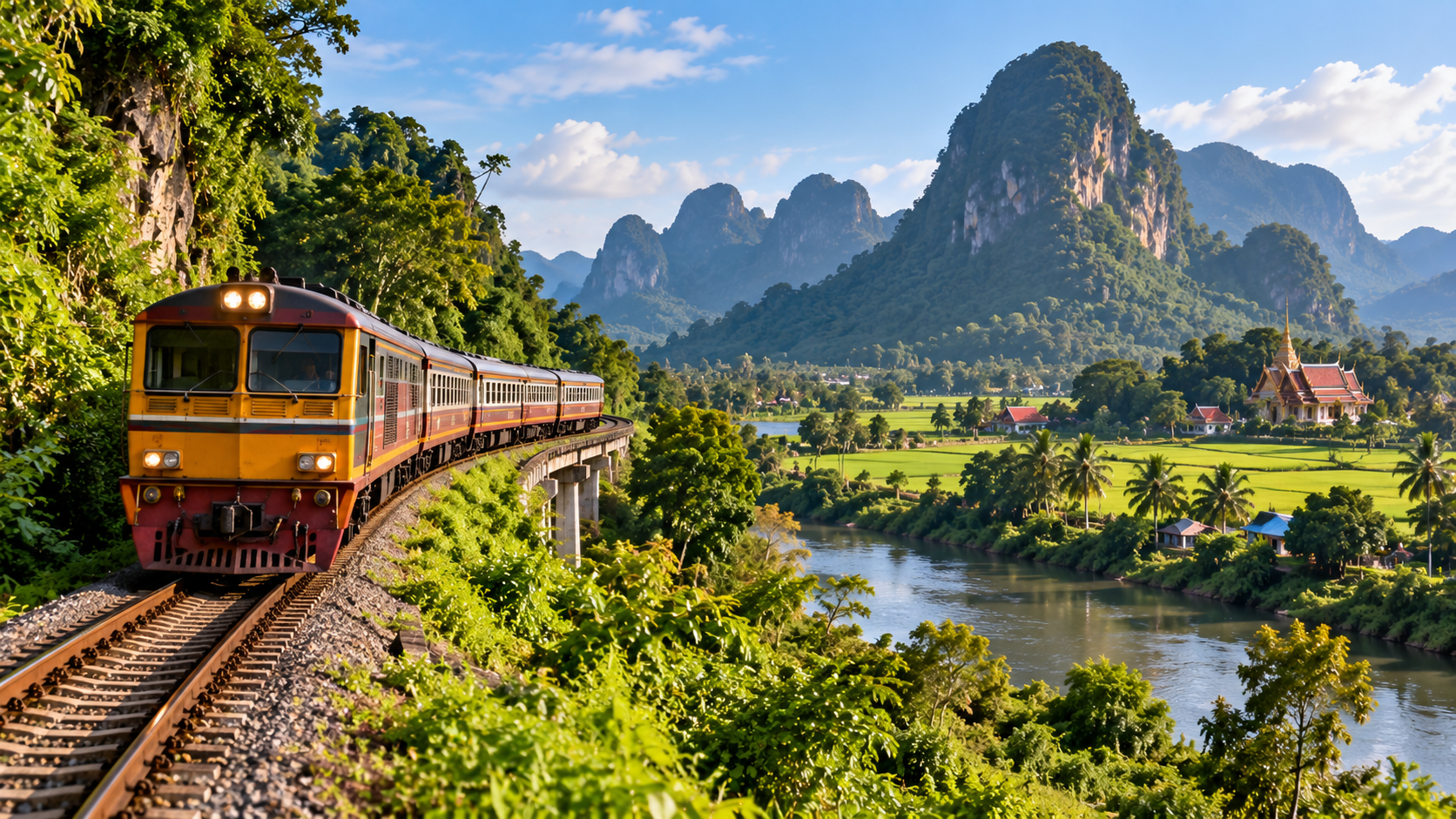
Domestic flights are useful when covering long distances, particularly between Bangkok, northern Thailand and the southern islands. Trains offer a slower but more atmospheric alternative on several routes, including services between Bangkok and Chiang Mai.
Long-distance buses and minivans reach destinations that aren’t served conveniently by rail. In southern Thailand, ferries and speedboats connect many islands with the mainland and with one another.
Within Bangkok, the BTS Skytrain and MRT metro are usually far easier than sitting in road traffic. Taxis and ride-hailing services are widely available, while tuk-tuks can be fun for short journeys if you agree on the fare beforehand.
In smaller towns and islands, transport may include songthaews — shared pickup-style vehicles — taxis, scooters and local buses.
Thailand Travel Costs and Currency
Thailand’s currency is the Thai baht (THB).
One of the country’s advantages is that it can work for almost any budget, although prices vary considerably between regions. Phuket, Koh Samui and popular beach resorts are generally more expensive than northern Thailand and smaller inland destinations.
As a broad planning guide, a budget traveller might spend around ฿1,000–฿1,500 per person per day, using hostels or simple guesthouses, eating local food and relying mainly on public transport.
A more comfortable mid-range trip might cost approximately ฿2,500–฿5,000 per person per day, allowing for better hotels, restaurants, taxis or ride-hailing services and regular paid attractions or excursions.
Luxury travel can easily exceed ฿8,000 per person per day, particularly if you stay at high-end island resorts or book private tours and transfers.
These figures should be treated as planning estimates rather than fixed budgets. Accommodation standards, island transfers, diving, nightlife and organised excursions can all change the cost of a trip considerably.
Cards are commonly accepted in hotels, shopping centres and larger restaurants, but cash remains useful — and sometimes essential — for street food, markets, small businesses and local transport.
Suggested Thailand Itineraries
How you structure your trip depends largely on how much time you have.
7 Days in Thailand
With one week, avoid trying to cover Bangkok, northern Thailand and the southern islands.
A good first trip could combine Bangkok with Chiang Mai, giving you a mixture of city life, temples, food and northern culture.
Alternatively, combine Bangkok with Phuket or Krabi if beaches are your priority.
10 Days in Thailand
Ten days gives you enough time to introduce a third destination without making the trip feel entirely dominated by transport.
One classic route would be:
Bangkok → Chiang Mai → Krabi or Phuket
Spend roughly three days in Bangkok, three in Chiang Mai and four on the coast.
2 Weeks in Thailand
Two weeks gives you considerably more flexibility.
You could spend three days in Bangkok, four days exploring Chiang Mai and northern Thailand, then divide the final week between Krabi and one or two islands.
Another option is to concentrate entirely on Bangkok and southern Thailand, combining the capital with several beach destinations at a much slower pace.
Whatever route you choose, resist the temptation to add another destination simply because it looks close on a map. Ferries, airport transfers, hotel check-outs and travel days consume more time than expected.
Practical Thailand Travel Tips for First-Time Visitors
Thai is the official language, but English is widely used in major tourist areas. Learning a few basic Thai words and phrases is nevertheless appreciated.
Thailand is predominantly Buddhist, and visitors should dress respectfully when entering temples. Shoulders and knees may need to be covered, shoes are normally removed before entering certain buildings, and Buddha images should be treated respectfully.
The electrical supply uses several plug types, so carrying a universal travel adapter is the simplest solution.
Mobile connectivity is generally excellent in populated areas, and tourist SIM cards and eSIMs make it easy to get mobile data.
Thailand is accustomed to international tourism, but normal travel precautions still apply. Keep an eye on valuables, use reputable transport providers and make sure your travel insurance covers the activities you intend to undertake.
Entry rules can also change. Travellers should check the current visa, passport and arrival requirements that apply to their nationality shortly before travelling rather than relying on older travel guides.
Plan Your Trip to Thailand
Thailand can be remarkably easy to visit while still offering enough variety for multiple trips.
For a first visit, don’t try to see the entire country. Choose the experiences that matter most to you — Bangkok’s energy, northern culture and mountains, historic temples or tropical beaches — and build your route around them.
A combination of Bangkok, northern Thailand and one southern region gives first-time visitors an excellent introduction if you have around two weeks. With less time, concentrating on two regions usually produces a more enjoyable trip.
For more information on destinations, attractions and current events, visit the official Tourism Authority of Thailand website.
As more of our Thailand guides are published, you’ll be able to use them to build your itinerary in greater detail, compare destinations and decide exactly when and where to go.