Barcelona is one of Europe’s most exciting city destinations, combining extraordinary architecture, historic neighbourhoods, Mediterranean beaches and a lively food scene. Whether you’re visiting for a weekend or spending several days exploring Catalonia’s capital, there are plenty of memorable things to do in Barcelona, from admiring Antoni Gaudí’s masterpieces to wandering through centuries-old streets.
Planning to explore more of the country? Our Spain Travel Guide covers the best places to visit, when to go and practical tips for travelling around Spain.
The city is particularly appealing because of its variety. You can spend the morning exploring a medieval neighbourhood, enjoy lunch at a traditional market, visit a world-famous architectural landmark in the afternoon and finish the day beside the Mediterranean Sea.
For first-time visitors, three or four days provide a good introduction to Barcelona’s main attractions. A longer stay allows you to explore quieter neighbourhoods, visit more museums and enjoy the city at a relaxed pace.
This guide covers 15 of the best attractions and experiences in Barcelona, including famous landmarks, cultural highlights, scenic viewpoints and a few places that are easy to overlook.
Table of Contents
Quick Overview: The Best Things to Do in Barcelona
| Category | Our pick |
| Best overall attraction | Sagrada Família |
| Best outdoor attraction | Park Güell |
| Best historic neighbourhood | Gothic Quarter |
| Best architectural experience | Casa Batlló |
| Best cultural attraction | Picasso Museum |
| Best free experience | Exploring El Born |
| Best scenic viewpoint | Montjuïc |
| Best for relaxation | Barceloneta Beach |
15 Best Things to Do in Barcelona
1. Visit the Sagrada Família
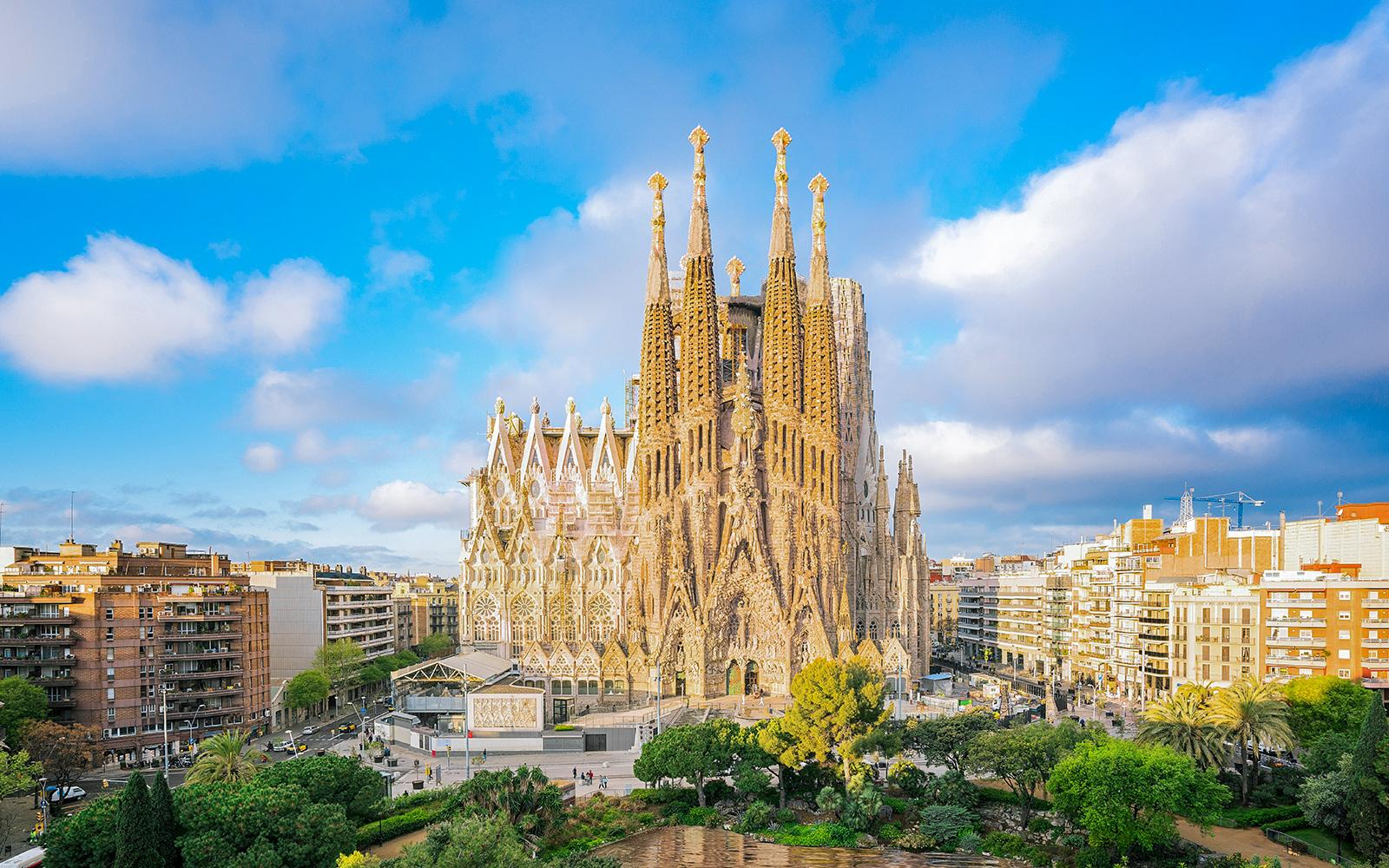
The Sagrada Família is Barcelona’s most recognisable landmark and one of the most extraordinary churches in the world. Designed by Catalan architect Antoni Gaudí, construction began in 1882, and the building has become a symbol of Barcelona’s architectural creativity.
The basilica’s exterior is famous for its elaborate façades, towering spires and intricate stonework. Each façade tells a different part of the Christian story, with sculptures and architectural details that reward close inspection.
However, the interior is arguably even more impressive. Gaudí designed columns that resemble branching trees, creating the impression of standing inside a vast stone forest. Colourful stained-glass windows transform the natural light, producing dramatically different effects throughout the day.
Visitors can explore the main basilica and museum, while certain ticket options also include access to a tower. An audio guide helps explain the symbolism and engineering behind the design.
Allow approximately 90 minutes to two hours for your visit, particularly if you enjoy architecture or photography.
Practical tips: Book tickets in advance through the official Sagrada Família website, especially during busy periods.. Arrive at your allocated time, and remember that the basilica is an active place of worship with appropriate dress requirements. Tower access requires a separate ticket option.
Best for: First-time visitors, architecture enthusiasts and anyone interested in Barcelona’s cultural heritage.
2. Explore the Colourful Park Güell
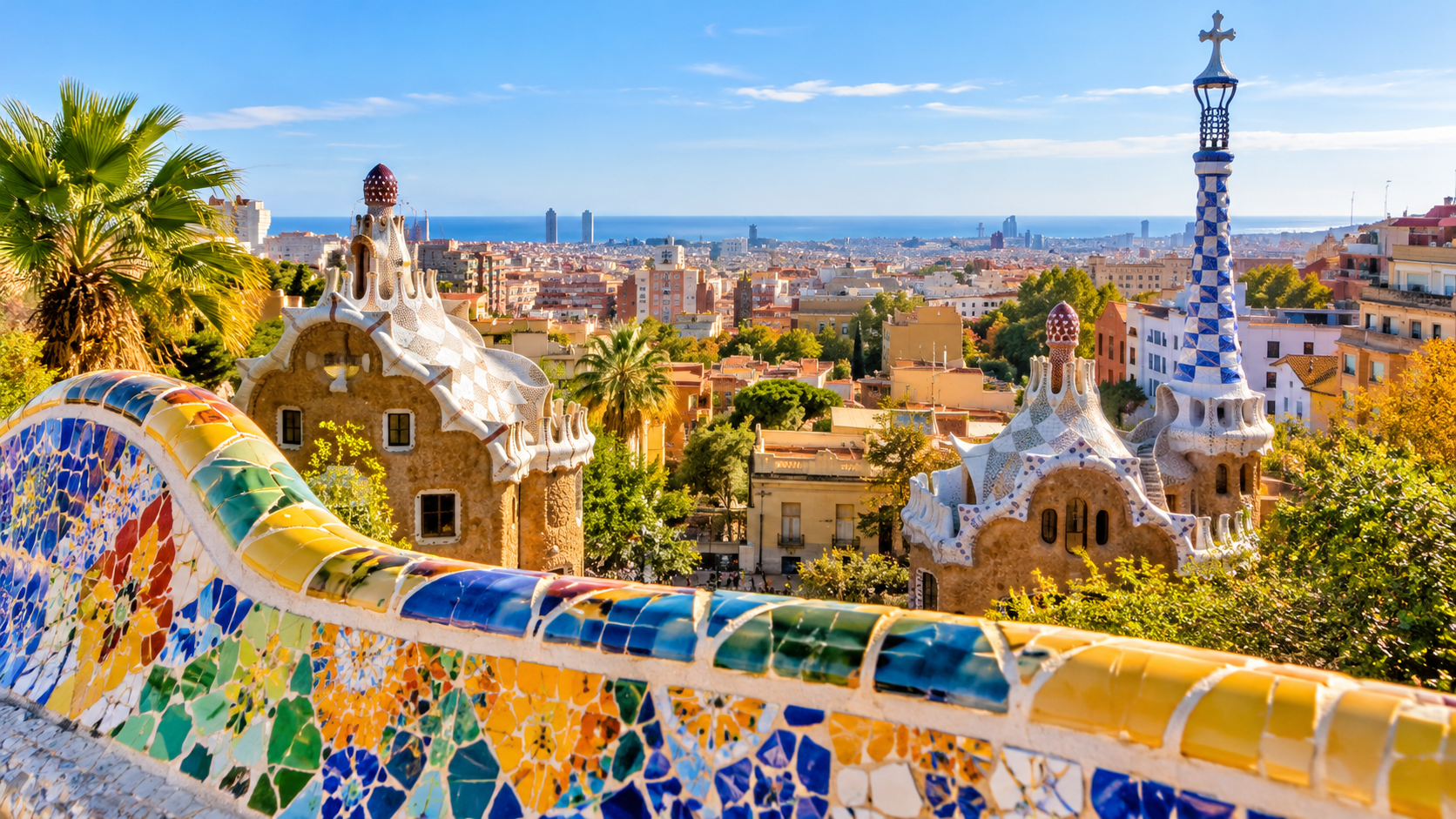
Park Güell is another of Gaudí’s remarkable creations, combining imaginative architecture with landscaped gardens and sweeping views across Barcelona.
Originally conceived as part of an ambitious residential development, the project eventually became a public park and one of the city’s most popular attractions.
Its most famous features include the colourful mosaic dragon near the main staircase, the impressive Hypostyle Room and the sweeping serpentine bench decorated with broken ceramic tiles.
The park’s design reflects Gaudí’s fascination with nature. Curved pathways, organic shapes and unusual stone structures blend into the surrounding hillside, creating an environment that feels unlike a conventional city park.
Beyond the architectural highlights, visitors can enjoy landscaped paths and panoramic views towards the Mediterranean. It is an excellent place for photography, particularly when the light is soft in the morning or late afternoon.
Plan to spend around 90 minutes to two hours exploring the park. Some paths involve slopes and steps, so comfortable walking shoes are advisable.
Practical tips: Park Güell operates timed entry for its ticketed visitor area. Reserve in advance, particularly during spring and summer, and allow enough time to reach the entrance because the park is uphill from several public transport stops.
Best for: Families, photographers, architecture enthusiasts and visitors who enjoy outdoor attractions.
3. Wander Through the Gothic Quarter
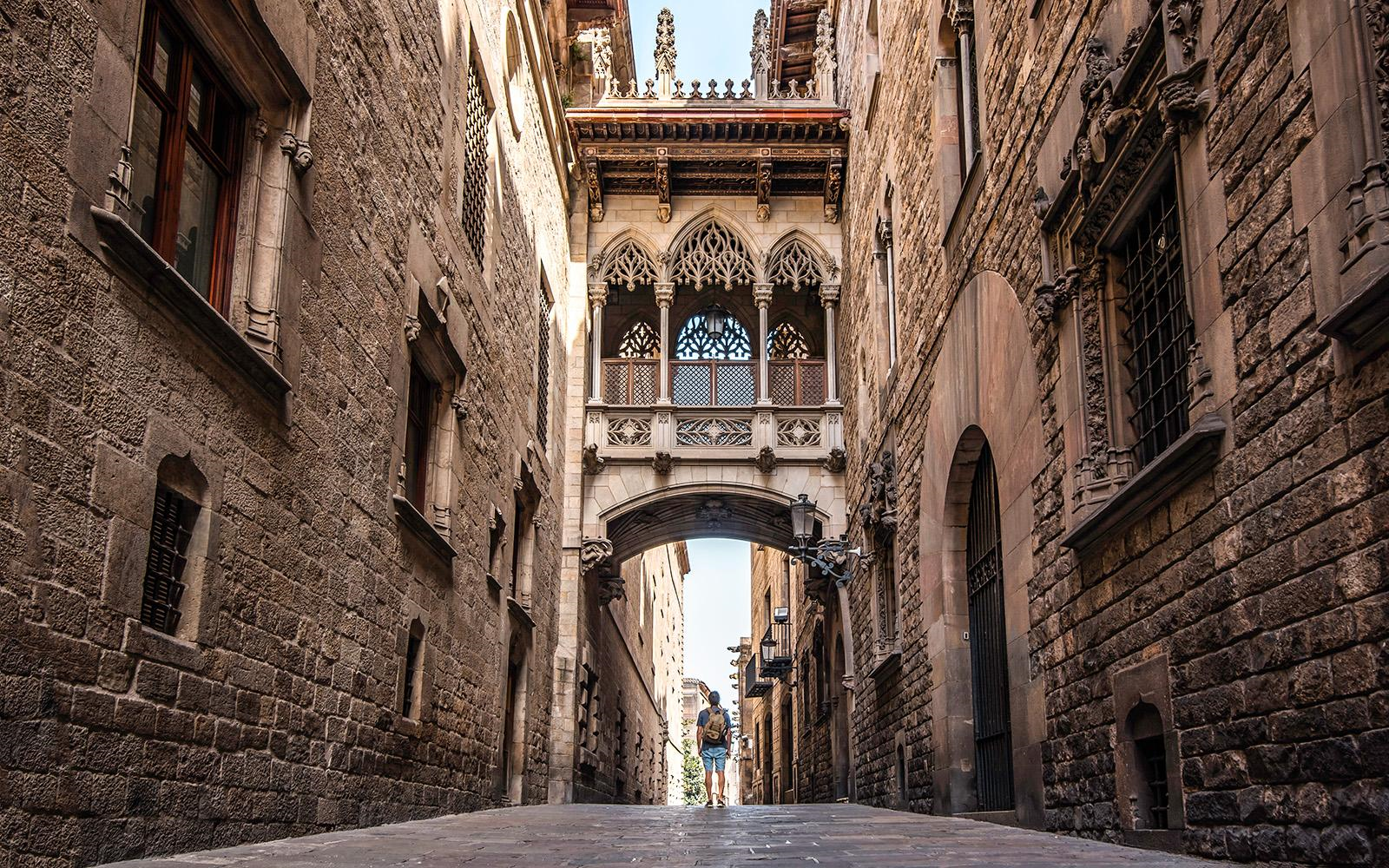
The Gothic Quarter, or Barri Gòtic, is one of Barcelona’s most atmospheric neighbourhoods. Its narrow streets, hidden squares and historic buildings provide a fascinating contrast to the modern city.
Located in the heart of the old town, the area contains remnants of Barcelona’s Roman past alongside medieval architecture and later historic buildings.
One of its main landmarks is Barcelona Cathedral, an impressive Gothic building with an elaborate façade and peaceful cloister. Nearby, Plaça del Rei offers a glimpse into the city’s medieval history, while Plaça Sant Felip Neri provides a quieter setting away from the busiest streets.
Part of the Gothic Quarter’s appeal is simply wandering without a fixed route. Small boutiques, cafés, historic courtyards and unexpected architectural details appear around almost every corner.
The neighbourhood is particularly enjoyable early in the morning, before the busiest sightseeing crowds arrive. Alternatively, visiting in the evening reveals a different atmosphere as restaurants and bars become busier.
Allow at least two hours to explore the main streets and landmarks, although it is easy to spend half a day here.
Practical tips: Exploring the streets is free, but some historic buildings charge admission. Keep an eye on your belongings in crowded areas.
Best for: History lovers, photographers, couples and travellers who enjoy exploring cities on foot.
4. Discover Casa Batlló
Casa Batlló is one of Barcelona’s most distinctive buildings and an outstanding example of Catalan Modernist architecture.
Situated on the elegant Passeig de Gràcia, this extraordinary house was redesigned by Gaudí in the early twentieth century. Its flowing façade, colourful mosaics and unusual balconies make it instantly recognisable.
The building is often associated with the legend of Saint George and the dragon. Its curved roof resembles a dragon’s back, while other architectural features have inspired interpretations connected with the famous Catalan legend.
Inside, Gaudí’s creativity becomes even more apparent. Rooms feature flowing lines, innovative ventilation systems, carefully designed lighting and beautiful decorative details.
The central lightwell is particularly impressive, with blue tiles arranged to distribute natural light throughout the building.
Modern visitor experiences use audio guides and digital interpretation to explain the architecture and history of the house.
A typical visit takes approximately 75–90 minutes, depending on the ticket selected and how much time you spend exploring.
Practical tips: Book online to secure your preferred entry time. Casa Batlló is relatively expensive compared with some Barcelona attractions, so visitors on a budget may prefer admiring its exterior.
Best for: Architecture enthusiasts, design lovers and visitors interested in Gaudí’s work.
5. Stroll Along La Rambla and Visit La Boqueria Market
La Rambla is Barcelona’s famous pedestrian boulevard, stretching from Plaça de Catalunya towards the waterfront.
Although it is one of the city’s busiest tourist areas, it remains an important part of Barcelona’s identity and provides an interesting introduction to the city’s atmosphere.
The boulevard is lined with historic buildings, shops, cafés and street activity. However, its main appeal lies in the surrounding streets and attractions rather than the tourist-oriented restaurants along the central walkway.
One of the highlights is Mercat de la Boqueria, a colourful food market just off La Rambla.
The market offers fresh produce, seafood, cured meats, cheeses, sweets and prepared food. It is a fascinating place to observe Barcelona’s food culture and sample local specialities.
For a more relaxed experience, visit earlier in the day before the busiest crowds arrive.
Allow around one to two hours for a leisurely walk along La Rambla and a visit to the market.
Practical tips: La Rambla is known for pickpocketing, so keep valuables secure. Food and drinks at prominent tourist stalls can be expensive; compare options before buying.
Best for: Food lovers, first-time visitors and travellers interested in Barcelona’s street life.
6. Relax at Barceloneta Beach
One of Barcelona’s greatest advantages is its location beside the Mediterranean Sea.
Barceloneta Beach is the city’s best-known beach, offering a long stretch of sand within easy reach of the historic centre.
During warmer months, visitors come to swim, sunbathe, play beach sports and enjoy the lively waterfront atmosphere. The promenade is also popular with walkers, cyclists and people enjoying the coastal scenery.
Even outside the main beach season, Barceloneta is worth visiting. A walk along the seafront provides a refreshing change from Barcelona’s busy streets and architectural attractions.
The surrounding neighbourhood has a strong maritime history, with narrow streets, traditional restaurants and a distinctive local character.
If you prefer quieter surroundings, continue along the coast towards beaches such as Bogatell, which can feel less crowded than Barceloneta.
You can spend anything from an hour walking along the promenade to an entire afternoon relaxing beside the sea.
Practical tips: Beach access is free. During summer, arrive earlier to find a good spot, and never leave valuables unattended while swimming.
Best for: Families, beach lovers and visitors looking for a break from sightseeing.
7. Enjoy the Views from Montjuïc
Montjuïc is a prominent hill overlooking Barcelona’s harbour, offering a combination of gardens, museums, historic landmarks and panoramic viewpoints.
The area is particularly appealing because it provides a different perspective on the city, away from the dense streets of the historic centre.
One of its main attractions is Montjuïc Castle, a historic fortress with views over the port and coastline.
The surrounding hillside also contains landscaped gardens, walking paths and cultural attractions, including the National Art Museum of Catalonia, housed in the impressive Palau Nacional.
Visitors can reach parts of Montjuïc using public transport, including the funicular and cable car, although walking is also possible.
The cable car provides attractive views over the city and harbour, while the hill’s viewpoints offer excellent opportunities for photography.
Montjuïc is large enough to occupy several hours, particularly if you plan to visit a museum or explore the gardens.
Practical tips: Wear comfortable shoes because attractions are spread across the hillside. Check cable car operating times and prices before visiting.
Best for: Photographers, families, museum visitors and travellers seeking scenic views.
8. Explore the Picasso Museum
Barcelona played an important role in Pablo Picasso’s early artistic development, making the Picasso Museum one of the city’s most significant cultural attractions.
Located in the historic El Born neighbourhood, the museum occupies a collection of medieval buildings that are interesting in their own right.
Its collection focuses particularly on Picasso’s formative years, providing insight into how his artistic style developed before he became one of the twentieth century’s most influential painters.
Visitors can see early drawings, paintings and studies alongside works that demonstrate his experimentation with different techniques and subjects.
The museum is especially valuable for understanding Picasso’s relationship with Barcelona, where he spent important years of his youth.
Unlike galleries that concentrate primarily on his later Cubist masterpieces, this museum offers a broader perspective on his artistic foundations.
Allow approximately 90 minutes to two hours for a visit.
Practical tips: Book tickets in advance during busy periods. Opening hours and occasional free-entry opportunities can change, so check the museum’s official website before visiting.
Best for: Art enthusiasts, history lovers and visitors interested in Barcelona’s cultural heritage.
9. Admire Casa Milà (La Pedrera)
Casa Milà, commonly known as La Pedrera, is another extraordinary Gaudí building located on Passeig de Gràcia.
Completed in the early twentieth century, the building is famous for its undulating stone façade, unusual balconies and innovative architectural design.
Its nickname, meaning “the stone quarry”, reflects the building’s distinctive appearance.
Inside, visitors can explore exhibitions explaining Gaudí’s architectural methods and the history of the building.
However, the rooftop is often considered the main highlight.
Its sculptural chimneys and ventilation towers resemble abstract figures, creating an almost surreal landscape above the city streets.
The rooftop also offers excellent views across Barcelona, including towards the Sagrada Família.
Casa Milà provides a fascinating comparison with Casa Batlló, demonstrating how Gaudí approached different architectural challenges.
Allow around 90 minutes for the standard visit.
Practical tips: If your budget allows only one Gaudí house, compare Casa Milà and Casa Batlló before booking. Casa Milà is particularly appealing for its rooftop, while Casa Batlló offers a more colourful interior experience.
Best for: Architecture enthusiasts, photographers and visitors interested in innovative design.
10. Experience the Atmosphere of El Born
El Born is one of Barcelona’s most appealing neighbourhoods, combining historic architecture with independent shops, cafés, restaurants and cultural attractions.
Located beside the Gothic Quarter, the district is ideal for exploring on foot.
Its narrow streets lead past medieval buildings, small squares and fashionable boutiques, creating an atmosphere that feels both historic and contemporary.
One of the area’s most impressive landmarks is the Basilica of Santa Maria del Mar, a beautiful example of Catalan Gothic architecture.
The church’s spacious interior and elegant stone columns make it well worth visiting.
El Born is also home to the Picasso Museum, making it convenient to combine cultural sightseeing with a leisurely walk through the neighbourhood.
In the evening, the area becomes particularly lively as restaurants and bars fill with locals and visitors.
Rather than rushing between attractions, take time to explore side streets, browse independent shops and enjoy a coffee in one of the neighbourhood’s squares.
Allow at least two hours, or longer if you plan to visit museums and historic buildings.
Practical tips: Exploring El Born is free, making it an excellent option for budget-conscious travellers.
Best for: Couples, food lovers, independent travellers and visitors seeking a more relaxed neighbourhood experience.
11. Visit the Palau de la Música Catalana
The Palau de la Música Catalana is one of Barcelona’s most beautiful buildings and an exceptional example of Catalan Modernist architecture.
Designed by architect Lluís Domènech i Montaner, the concert hall is famous for its elaborate decoration, colourful mosaics, stained glass and remarkable attention to detail.
Its most striking feature is the enormous stained-glass skylight above the main auditorium, which fills the space with natural light.
Unlike conventional concert halls, the Palau combines architectural grandeur with a vibrant and colourful interior.
Visitors can explore the building through guided or self-guided tours, depending on availability.
However, attending a concert offers an especially memorable experience, allowing you to appreciate the building as a functioning performance venue.
The Palau hosts a variety of musical performances, including classical concerts and other genres.
A standard architectural visit typically takes around one hour.
Practical tips: Check the performance schedule before travelling. Concert tickets may provide better value than a sightseeing tour if you also enjoy live music.
Best for: Music lovers, architecture enthusiasts and visitors looking for an unusual cultural experience.
12. Explore Parc de la Ciutadella
Parc de la Ciutadella is one of Barcelona’s most attractive green spaces and a pleasant place to escape the busy city streets.
Located near El Born, the park features landscaped gardens, tree-lined paths, open lawns and several notable monuments.
Its most famous landmark is the Cascada Monumental, an elaborate fountain decorated with sculptures and architectural details.
The park is popular with locals enjoying picnics, walking, exercise and outdoor relaxation.
It is also home to the Catalan Parliament building and Barcelona Zoo, although the zoo requires separate admission.
For visitors who have spent several days exploring museums and architectural attractions, the park provides a welcome opportunity to slow down.
You can easily combine a visit with El Born, the Arc de Triomf or the nearby waterfront.
Allow approximately one hour for a relaxed walk, or longer if you want to enjoy a picnic or spend time in the gardens.
Practical tips: Entry to the public park is free. It is particularly pleasant during spring and autumn when temperatures are comfortable for walking.
Best for: Families, budget travellers and anyone looking for a peaceful outdoor break.
13. Discover the Bunkers del Carmel Viewpoint
For one of Barcelona’s most impressive panoramic views, head to the Bunkers del Carmel viewpoint on Turó de la Rovira.
The site was originally used for anti-aircraft defences during the Spanish Civil War and later became a popular place to admire the city skyline.
Today, visitors can enjoy sweeping views across Barcelona, with the Sagrada Família, the Mediterranean coastline and the surrounding hills visible on clear days.
Unlike some of the city’s more formal viewpoints, the Bunkers del Carmel offer a relatively simple experience focused on the scenery and historical setting.
The viewpoint is particularly attractive in the late afternoon when the changing light highlights the city’s distinctive street grid.
However, its popularity means that it can become crowded, especially around sunset.
Reaching the viewpoint involves an uphill walk, so comfortable footwear is essential.
Allow approximately one to two hours, including time to reach the site and enjoy the views.
Practical tips: Access is free, but opening hours and access restrictions apply. Check current arrangements before visiting, particularly if planning to go near sunset.
Best for: Photographers, budget travellers and visitors seeking panoramic city views.
14. Sample Traditional Catalan Food
Exploring Barcelona’s food culture is an essential part of experiencing the city.
Although Barcelona offers cuisine from across Spain and around the world, traditional Catalan dishes provide a distinctive introduction to the region’s culinary heritage.
One of the simplest specialities is pa amb tomàquet, bread rubbed with tomato and typically dressed with olive oil and salt.
Other popular dishes include escalivada, made with roasted vegetables, and botifarra, a traditional Catalan sausage often served with beans.
For dessert, try crema catalana, a creamy custard topped with a crisp caramelised sugar layer.
Barcelona has restaurants catering to almost every budget, from casual neighbourhood cafés to internationally recognised fine-dining establishments.
For a more authentic experience, look beyond the busiest tourist streets and explore restaurants in neighbourhoods such as Gràcia, Sant Antoni or El Born.
A traditional lunch menu, often advertised as a menú del dia or menú del migdia, can provide good value compared with ordering individual dishes.
Practical tips: Lunch is commonly eaten later than in northern Europe, and many restaurants become busiest after 1:30 pm. Check menus and prices before sitting down.
Best for: Food enthusiasts, couples and travellers interested in local culture.
15. Explore the Gràcia Neighbourhood
Gràcia offers a different side of Barcelona, with a relaxed atmosphere, independent shops and lively neighbourhood squares.
Once a separate village, Gràcia retains a strong local identity despite becoming part of the wider city.
Its narrow streets are lined with cafés, small boutiques, restaurants and cultural venues.
Plaça de la Vila de Gràcia and Plaça del Sol are among the neighbourhood’s best-known squares, providing pleasant places to sit and observe everyday life.
Unlike the Gothic Quarter or La Rambla, Gràcia generally feels less dominated by major tourist attractions.
This makes it particularly appealing for visitors who want to experience Barcelona beyond its most famous landmarks.
The neighbourhood is also convenient for combining with a visit to Park Güell, although the park is situated further uphill.
Spend an afternoon wandering through the streets, stopping for coffee and exploring the local shops.
Gràcia is especially enjoyable in the evening, when residents gather in its squares and restaurants.
Practical tips: Exploring the neighbourhood is free. Allow two or three hours if you want to wander without rushing.
Best for: Repeat visitors, couples, independent travellers and anyone interested in Barcelona’s local atmosphere.
Tickets, Tours and Time-Saving Tips
Barcelona’s most popular attractions can become extremely busy, particularly between late spring and early autumn.
If you’re visiting for only a few days, planning ahead will help you make the most of your time.
The Sagrada Família and Park Güell should generally be booked in advance because both use timed admission. Casa Batlló, Casa Milà and the Picasso Museum can also attract substantial queues during busy periods.
Guided tours are particularly worthwhile at attractions where historical or architectural context adds significantly to the experience, such as the Sagrada Família or Gothic Quarter.
However, not every attraction requires a paid tour. Neighbourhoods such as El Born, Gràcia and the Gothic Quarter are enjoyable to explore independently.
Barcelona’s metro network makes travelling between major areas relatively straightforward, although walking is often the best way to experience the historic centre.
Try grouping nearby attractions together rather than repeatedly crossing the city. For example, Casa Batlló and Casa Milà are both on Passeig de Gràcia, while the Gothic Quarter, El Born and Parc de la Ciutadella can easily be combined.
How to Fit the Best Things to Do in Barcelona Into Your Trip
Barcelona has enough attractions to fill a week, but most first-time visitors can experience its main highlights in three or four days.
One Day in Barcelona
If you have only one day, focus on the city’s most distinctive attractions.
Start with the Sagrada Família, then explore Passeig de Gràcia to admire Casa Batlló and Casa Milà from the outside.
Spend the afternoon wandering through the Gothic Quarter and El Born before finishing with a walk towards the waterfront.
This itinerary provides a good introduction without trying to visit too many ticketed attractions.
Two to Three Days in Barcelona
With two or three days, you can explore the city at a more comfortable pace.
Dedicate one day to Gaudí’s architecture, visiting the Sagrada Família, Park Güell and one of his famous houses.
Use another day to explore the Gothic Quarter, El Born, the Picasso Museum and Parc de la Ciutadella.
On your third day, visit Montjuïc, relax at Barceloneta Beach or explore the Gràcia neighbourhood.
Four or More Days in Barcelona
A longer visit allows you to experience Barcelona beyond its headline attractions.
Consider spending additional time in neighbourhoods such as Gràcia and Sant Antoni, visiting smaller museums or enjoying the city’s beaches.
You could also take a day trip to Montserrat, famous for its mountain scenery and monastery, or explore nearby coastal towns.
The extra time makes it easier to balance sightseeing with relaxed meals, neighbourhood walks and spontaneous discoveries.
Frequently Asked Questions About Barcelona
What is the number one attraction in Barcelona?
The Sagrada Família is generally considered Barcelona’s most iconic attraction. Its extraordinary architecture, intricate façades and remarkable interior make it a highlight for most first-time visitors.
How many days do you need in Barcelona?
Three to four days is ideal for a first visit. This provides enough time to explore the main architectural landmarks, historic neighbourhoods, museums and waterfront without rushing.
Are there free things to do in Barcelona?
Yes. Exploring the Gothic Quarter, El Born and Gràcia costs nothing, while Barceloneta Beach and Parc de la Ciutadella are also free to visit. Several viewpoints offer excellent views without an admission fee.
Is Barcelona worth visiting for a weekend?
Absolutely. A weekend is enough to experience several major attractions, enjoy the city’s food scene and explore its historic centre. However, booking popular attractions in advance is advisable when time is limited.
What is the best time of year to visit Barcelona?
Spring and autumn are particularly pleasant, with generally comfortable temperatures for sightseeing and fewer crowds than the busiest summer months.
Summer is ideal for beach activities but can be hot and crowded. Winter is quieter and can offer good value for visitors primarily interested in architecture, museums and cultural attractions.
Final Thoughts: Planning Your Barcelona Visit
Barcelona offers an unusually varied city-break experience, combining world-famous architecture, historic streets, Mediterranean beaches and distinctive Catalan culture.
For first-time visitors, the Sagrada Família, Park Güell and Gothic Quarter should be high on the list. However, exploring neighbourhoods such as El Born and Gràcia can be equally rewarding.
The best approach is to balance major attractions with time to wander, enjoy local food and experience the city’s atmosphere.
Whether you’re visiting for a weekend or a longer holiday, Barcelona has more than enough to make your trip memorable.